
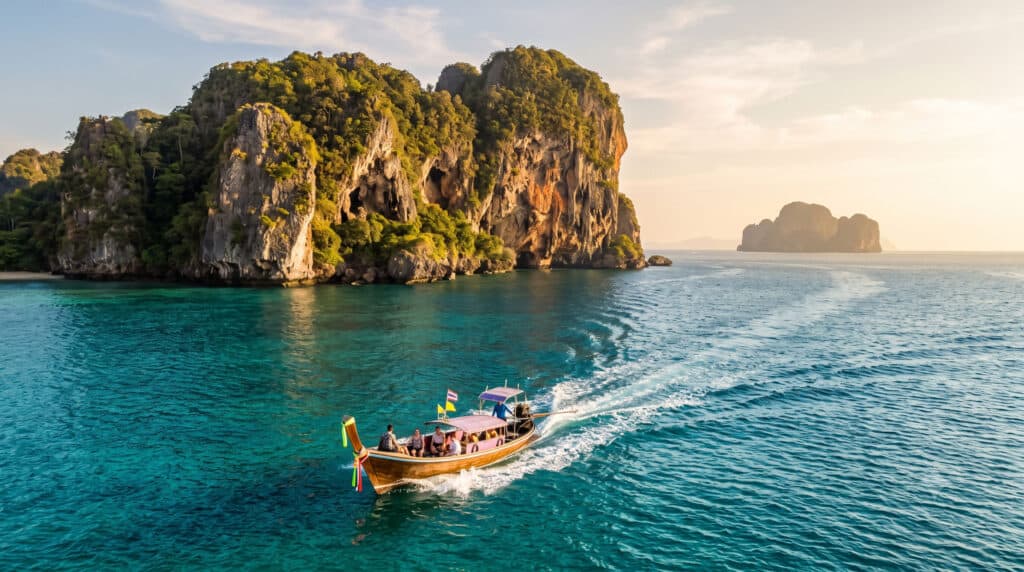
Ask anyone who’s been to Thailand what actually stuck with them, and the answer is almost never a temple or a shopping mall — it’s an island. A longtail boat cutting through water so clear it looks fake in photos. A viewpoint hike that ends at a sunset you weren’t expecting. A beach dinner that somehow turns into 2 a.m. under more stars than you’ve ever seen at once.
Building a Thailand island hopping itinerary that actually delivers on that, though, takes a bit more planning than the postcards suggest. Thailand’s islands sit on two separate coastlines with two separate monsoon patterns, and the “quick hop” you picture can turn into a full travel day if you zig-zag between them. Below you’ll find the must-visit islands (plus a few underrated ones), the easiest ways to get between them, a 7-day route that actually works, and updated 2026 season notes — including a couple of seasonal closures that have shifted since last year.
Why Thailand Island Hopping Works So Well
Thailand is genuinely built for this. You’ve got major flight hubs in Bangkok, Phuket, Krabi, Surat Thani, Hat Yai, and Koh Samui, plus frequent ferries and speedboats linking the popular islands. And the range of vibes is wide — luxury escapes, diving islands, backpacker beaches, wellness retreats, and full-blown party nights, sometimes all within a couple of hours of each other.
The trick is picking one main region and treating the other as a bonus rather than the backbone of your trip:
- Andaman Sea (west coast): Phuket, Phi Phi, Similan Islands, Koh Lanta, Koh Lipe
- Gulf of Thailand (east coast): Koh Samui, Koh Pha-ngan, Koh Tao
You can combine both in one trip — the 7-day route below does exactly that — but you’ll enjoy it a lot more if you minimize backtracking and accept that one cross-coast jump is usually the limit for a single week. For a broader look at Thailand’s coastline beyond these islands, our guide to the best beaches in Thailand covers spots organized by vibe — families, snorkeling, seclusion, and nightlife.
Best Time to Go Island Hopping in Thailand
Thailand’s two coasts run on opposite monsoon schedules, so “best time to visit” really depends on which islands you’re chasing.
Andaman Sea (Phuket / Phi Phi / Similan / Lipe)
Generally best from November through April. The Similan Islands run on a much stricter seasonal calendar than the rest of the Andaman coast — more on that below.
Gulf of Thailand (Samui / Pha-ngan / Tao)
Often best from January through September, with the heaviest Gulf rains typically landing later in the year than the Andaman monsoon. If you’re traveling shoulder season on either coast, it’s still doable — just build in flexibility and avoid stacking multiple boat connections on the same day.
The Best Islands to Visit in Thailand (Island-by-Island)
Similan Islands (Andaman Sea)
If snorkeling or diving is the point of your trip, the Similans are the kind of place that gets an involuntary “no way” out of you the second you put your face in the water. Crystal visibility, dramatic granite boulders, and marine life that looks staged for a documentary.
2026 season update: Mu Ko Similan National Park closes every year for monsoon safety and ecosystem recovery. For the 2026 season, that closure runs May 15 through mid-October — a shift from 2025’s window, so double-check dates if you’re basing a trip around it. The park typically reopens around October 15, with the Department of National Parks confirming the exact date one to two weeks ahead. It’s usually visited as a day trip from Khao Lak or Phuket during open season, and current entry systems can include e-ticketing, so plan ahead if Similan is a must-do.
Koh Phayam (Andaman Sea, near Ranong)
Koh Phayam is for the hammock-and-smoothie crowd. It’s mellow, lightly developed, and still feels like the Thailand people describe from before the biggest tourist waves arrived. Expect quiet roads, low-key beach bars, and a slower rhythm — this isn’t the island for big clubs and resorts, and that’s exactly the appeal.
Koh Lipe (Far South Andaman)
Small, bright-blue, and genuinely pretty — Koh Lipe also runs a bit more “boutique island” on pricing than some of its neighbors, and plenty of travelers happily pay the difference. The three beaches worth knowing: Sunrise Beach for morning light, Sunset Beach for golden hour, and Lipe’s own Pattaya Beach, which is calm and scenic — nothing like its mainland namesake.
Most travelers connect via Hat Yai and Pak Bara Pier, then speedboat over to Lipe.
Koh Pha-ngan (Gulf of Thailand)
Yes, it’s famous for the Full Moon Party — but Koh Pha-ngan is also packed with quiet beaches, calm coves, and yoga corners that have nothing to do with nightlife. Haad Rin is the party beach; don’t skip the calmer side of the island if you want that tropical-escape feeling during the day.
Full Moon Party
The party still runs monthly on Haad Rin Beach, and 2026 brought one useful change: dates now shift to the day after a Buddhist holy day if they’d otherwise land on one, instead of getting reshuffled unpredictably. If your trip lands near Asahna Bucha Day or Khao Phansa in late July, check our Thailand alcohol ban dates guide before you lock in your island-hopping schedule — those are exactly the dates that push party nights around.
Koh Samui (Gulf of Thailand)
Samui makes a great “base island” — it has a major airport, accommodation from budget to genuinely luxe, and enough restaurants and family-friendly areas to keep everyone happy. Lamai is a solid pick if you want something beautiful without the busiest zones’ chaos.
Ethical elephant visit (verified open): Samui Elephant Sanctuary is currently operating two locations on the island — Bophut and Chaweng Noi — with no-riding, feed-and-observe programs of varying lengths.
Koh Tao (Gulf of Thailand)
Koh Tao (“Turtle Island”) is one of Thailand’s best-known diving hubs — strong visibility, plenty of dive schools, and snorkeling spots that don’t require a long boat ride to reach. Standard travel caution applies here as anywhere with boats, nightlife, and scooters in the mix.
Phi Phi Islands (Andaman Sea)
Phi Phi is iconic for a reason — dramatic limestone cliffs, postcard bays, and a viewpoint hike you’ll remember long after the trip. Go early or near sunset for the best light and cooler temperatures; the climb is short but genuinely sweaty in midday heat. For a deeper dive into where to stay and what to skip, see our full Phi Phi Island guide.
Phuket (Andaman Sea)
Phuket is the “big hub” island — beaches, nightlife, day tours, shopping, and easy transport connections to everywhere else in the Andaman. It’s also one of the easiest islands to start hopping from, since it’s so well-connected by both air and sea. For neighborhood-by-neighborhood picks, check our guide to where to stay in Phuket.
Ethical elephant visit (verified open): Phuket Elephant Sanctuary is active and running half-day programs through its 30-acre jungle site. One update worth knowing: as of April 1, 2026, the sanctuary discontinued hand-feeding interactions to keep the elephants’ behavior as natural as possible — the visit is now observation-focused rather than hands-on.
How to Get Around Thailand’s Islands (Without Losing a Whole Day)
Three rules cover most of it:
- Pick a region first (Andaman or Gulf), then add one cross-coast jump at most.
- Fly the long legs, ferry the short legs.
- In choppy seasons, avoid stacking multiple boats in a single day.
On flights: older guides still mention Thai Smile, but that airline was folded into Thai Airways back in January 2024. For common domestic routes today, expect to fly AirAsia, Thai Lion Air, VietJet’s Thai network, or Thai Airways, depending on the route and your budget. If you’re still deciding which city to land in first, our guide to Thailand’s best airports breaks down BKK, Phuket, Krabi, and Samui options.
A Realistic 7-Day Thailand Island Hopping Itinerary (Phuket + Phi Phi + Samui + Pha-ngan + Tao)
This route is built for travelers who want a taste of both coasts, minimal wasted time, and a mix of scenery, beach days, and a little nightlife.
Day 1: Arrive Bangkok → Fly to Phuket. You can overnight in Bangkok, but on a 7-day trip, heading straight to Phuket usually makes the whole journey feel smoother — it’s a strong launch point for the Andaman side. Night idea: beach dinner, a wander through the night markets, or just an early night to shake off jet lag.
Day 2: Phuket beach day + one signature experience. Keep this one flexible — a calmer beach away from the busiest strips, an Old Town wander with cafés, or an ethical elephant visit if that fits your style. Sleep early-ish; tomorrow is boat day.
Day 3: Ferry or speedboat to Phi Phi + viewpoint sunset. Take a morning ferry from Phuket and settle into Phi Phi Don. Do the viewpoint hike (sunset is genuinely worth the sweat), snorkel or kayak in the afternoon, and consider a Muay Thai night out if you’re up for it.
Day 4: Phi Phi → Phuket → fly to Koh Samui. This is your biggest logistics day, so start early — you’ll return to Phuket, then fly onward to Samui. Once you land, keep it simple: dinner, a beach stroll, sleep.
Day 5: Koh Samui → Koh Pha-ngan (Full Moon Party night, if the timing lines up). Quick ferry hop over to Pha-ngan. If you’re there for the Full Moon Party, align your schedule with the published dates. If not, Pha-ngan’s beaches and sunsets are more than enough of a reason to visit on their own.
Day 6: Day trip (or overnight) to Koh Tao for snorkeling or diving. Hop the ferry to Tao for a water day — dive trip, snorkeling, or a chill beach afternoon. It’s a perfect reset after a big night on Pha-ngan.
Day 7: Return to Samui → fly back to Bangkok. Ferry back to Samui, then fly onward. Build in a little buffer for boat schedules — Thailand’s ferries are usually reliable, but weather happens.
Want to Swap Islands? Easy Upgrades and Alternatives
If you want more nature, less party
Swap the Full Moon night for extra Samui beach time plus a sanctuary visit, or add a quieter island like Koh Phayam on a future trip.
If you want world-class snorkeling or diving
Add the Similan Islands as a day tour — just confirm you’re traveling during the open season (mid-October through mid-May), since the 2026 closure window runs May 15 to roughly October 15.
If Koh Lipe is your dream island
Do a separate far-south itinerary — Lipe pairs best with itself and the nearby Trang islands, since it’s a long haul from either Phuket or Samui. If you’d rather stay entirely on the Andaman side, our Andaman Sea 7-day itinerary (Phuket → Phi Phi → Krabi/Railay → Koh Lanta) is a beach-first alternative that skips the Gulf crossing entirely.
Travel Insurance for Thailand Island Hopping
Island-hopping itineraries carry a specific set of risks that a standard single-destination trip doesn’t: missed domestic flight connections when a ferry runs late, cancelled Similan or Phi Phi boat trips due to weather, and the more mundane but very real chance of a scooter scrape, a jellyfish sting, or a stomach bug that lands you in a clinic on an island with limited medical facilities.
A few things worth checking before you buy a policy:
- Missed connection coverage — with a multi-leg itinerary like this one, a delayed ferry can cascade into a missed domestic flight. Look for a policy that covers rebooking costs, not just cancellation.
- Water sports and scooter exclusions — snorkeling is usually covered by default, but diving, jet skiing, and scooter accidents often need an add-on or a specific activity rider. Read the fine print if any of that is on your itinerary.
- Medical evacuation — smaller islands (Koh Phayam, Koh Lipe, the outer Similans) don’t have serious medical facilities. A policy with evacuation coverage to Bangkok or Phuket is worth the extra premium if your route includes them.
Compare a couple of quotes before you commit — prices for the same coverage tier can vary more than people expect between providers, and it’s a small line item against the cost of the trip itself.
Practical Island Hopping Tips
- Pack light — boats, sand, stairs, and hot docks make giant luggage genuinely miserable.
- Bring seasickness tablets if you’re even slightly prone.
- Protect reefs — reef-safe sunscreen, don’t touch coral, don’t feed fish.
- Keep cash for smaller islands, where ATMs can run empty on busy weekends.
- Build buffer time before flights when you’re coming straight off a ferry.
- Check marine park entry rules before tours — e-ticketing or advance registration applies in some parks now.
Frequently Asked Questions
What is the best island in Thailand?
It depends on your travel style. Phuket is the best “hub” island for easy transport and things to do. Phi Phi wins on iconic scenery. Koh Pha-ngan is the top pick for party travelers thanks to the Full Moon Party. Koh Tao and the Similan Islands (in season) lead for diving and snorkeling.
How many days do I need for Thailand island hopping?
Seven days is enough to combine one Andaman island and two or three Gulf islands, as in the itinerary above, without feeling rushed. If you have 10 days, you can add a Chiang Mai extension or slow the pace down and skip a transfer day.
Which islands should I skip if I only have 7 days?
Koh Lipe and the far-south islands are the ones to save for a dedicated trip — they’re a long haul from both Phuket and Samui, and squeezing them into a week usually means more transit than beach time.
Do I need travel insurance for island hopping in Thailand?
It’s strongly worth it. Multi-leg itineraries with ferries and domestic flights carry real risk of missed connections, and smaller islands have limited medical facilities if something goes wrong. Look specifically for missed-connection and medical evacuation coverage.
What’s the best way to travel between Thailand’s islands?
Fly the long legs (like Phuket to Koh Samui) and ferry the short ones (like Phuket to Phi Phi, or Samui to Koh Pha-ngan). Trying to ferry everything usually eats days you don’t have.
Is Thailand safe for island hopping?
Thailand is widely traveled and generally feels welcoming, especially in major tourist areas. Standard precautions apply — scooters, nightlife, and boat conditions are where most travelers actually run into trouble, not crime. For current country-wide guidance, official travel advisories typically recommend standard caution and avoiding specific border areas.
Whichever route you land on, the biggest mistake is trying to see too much. Pick a coast, add one cross-coast jump if you can’t resist, and let the ferry schedule set your pace instead of fighting it. That’s the version of this trip people actually come home talking about.