
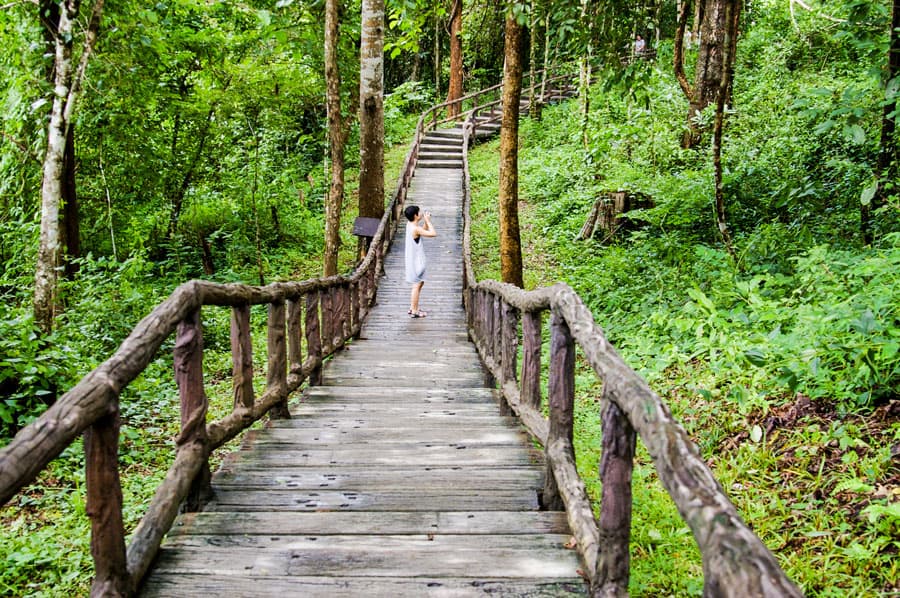
Some of the most jaw-dropping nature spots on Earth are tucked inside Thailand’s beaches, limestone karsts, cloud forests, and deep jungle. Yes—Thailand is famous for island life and turquoise water. But if you lace up your shoes and head inland (or straight up a karst ridge), you’ll find hikes that feel like you’ve stepped into a nature documentary.
Below are some of the best hikes in Thailand, including beach-and-karst viewpoints, cool mountain nature trails, remote jungle expeditions, and even a bat-flight spectacle that you’ll remember forever. Whether you want a popular “must-do” trek, something off-the-grid, or a family-friendly loop with huge views, this list has a trail for you.
Before You Go: Thailand Hiking Tips That Make Everything Better
A few small choices can turn a sweaty suffer-fest into one of your favorite days of the trip:
- Start early. Heat and humidity build fast—especially in the South. Sunrise or early morning starts are your best friend.
- Bring more water than you think. For steamy hikes like Krabi’s Dragon Crest, plan ~2 liters per person (more if you’re slow, it’s sunny, or you sweat a lot).
- Wear real shoes. Many trails include slick rock, steep stair sections, or ladder climbs.
- Respect closures and quotas. Some routes (especially ridge treks and summit hikes) are seasonal and/or require reservations and guides.
- Plan around smoke season in the North. Northern Thailand can experience poor air quality during parts of the burning season—many hikers avoid peak smoky months.
The Best Hikes in Thailand (Beach, Jungle, Culture, and Cloud Forest)
1) Dragon Crest Mountain (Khao Ngon Nak Nature Trail) — Krabi
Best for: Iconic karst-and-sea views, a big “I can’t believe this is real” summit photo
Krabi is famous for limestone cliffs punching out of the sea—and Dragon Crest is one of the best ways to see that drama from above. The trail begins near Tubkaek/Tab Kaek area and climbs through jungle to a viewpoint overlooking the Andaman coast.
Expect heat, humidity, and a steady climb—then a summit view that shows off the Andaman Sea, mountain ridges, and patchwork plantations in one sweeping panorama.
What’s updated / good to know:
- Many hikers report a ranger check-in/sign-in process at the start for safety.
- The entry fee is commonly reported around 200 THB for foreign adults (often cash-only).
Bring: 2L water per person, snack, grippy shoes, hat, and a towel for the “why am I sweating in every photo?” moment.
2) Doi Luang Chiang Dao (Summit Route) — Chiang Mai Province
Best for: Serious summit energy and some of the most beautiful mountain scenery in Thailand
If you love big mountains and wild, rugged terrain, Doi Luang Chiang Dao is legendary. It’s often described as one of the most scenic highland hikes in the country—and it’s also one of the easiest places to learn the universal truth of trekking: the best views rarely come free.
This route is not a casual stroll. Navigation, weather, and seasonal access matter. Newer hikers typically do better with a guide and a clear plan.
What’s updated / good to know:
- Thailand’s official tourism site notes you generally need to arrange in advance (they mention planning ahead and contacting for details).
- Local Chiang Dao contacts publish sanctuary contact details (helpful for current booking steps and seasonal rules). doichiangdaobiosphere.com
Pro tip: If the summit route is restricted or fully booked, Chiang Dao still has beautiful lower-elevation nature, caves, and viewpoints—so the trip is rarely “wasted.”
3) Kew Mae Pan Nature Trail — Doi Inthanon (near Chiang Mai)
Best for: A friendly, high-reward hike with clouds, ridgelines, and “Roof of Thailand” vibes
Kew Mae Pan is the hike you recommend to almost everyone—because it delivers huge scenery without requiring you to be a mountaineering superhero. You’ll walk a well-loved loop through mountain ecosystems with frequent “stop and stare” moments.
And then… the clouds show up. When conditions are right, you’ll be surrounded by mist like you’re walking through the sky. (Yes, it’s as magical as it sounds.)
What’s updated / good to know:
- This trail has a well-publicized seasonal closure during the rainy months and reopens around Nov 1 after restoration periods.
- A local guide is required on the trail (this is commonly stated in recent hiking guidance).
Safety note: The ridge sections can feel narrow, especially in thick cloud. Go slow, keep space, and enjoy the drama responsibly.
4) Khao No–Khao Kaeo — Nakhon Sawan (Central Thailand)
Best for: A steep, memorable climb + a sunset bat “river” in the sky
Khao No is a fantastic “surprise hit” of central Thailand: a steep stair-and-ladder climb up a karst formation, plus a wildlife show that feels unreal.
The area is known for lots of monkeys near the base. They can be cute, chaotic, and opportunistic—so keep snacks packed away and don’t let your water bottle become a macaque trophy.
The bat spectacle: Around sunset, large numbers of bats stream out of the caves in a flowing ribbon. People describe it as lasting around ~15 minutes, with timing varying by season.
What’s updated / good to know:
- Widely described as free access, with strong warnings to avoid climbing in rain because ladders can get dangerously slippery.
If you want a “Thailand hiking” memory that your friends back home won’t stop asking about, this is the one.
5) Khao Chang Phueak (Knife-Edge Ridge Trek) — Kanchanaburi
Best for: Adventurous hikers who want a controlled-but-intense ridge challenge
The name basically tells you what you’re signing up for: a sharp ridge trek with narrow sections that demand focus (and a calm relationship with heights). It’s thrilling, it’s exposed, and it’s one of Thailand’s most talked-about challenge hikes.
What’s updated / good to know:
- The trekking activity is seasonal and commonly runs during a Nov–Jan window, with online booking described in Thai travel coverage. ChillPaikhai
- The Thai Department of National Parks portal lists Thong Pha Phum National Park contact information, useful for confirming the latest rules and booking steps.
- Park communications describe booking via an online form posted on the park’s official Facebook presence.
Do not attempt in rain. Mud + ridge exposure is not the vibe.
6) Khao Daeng Viewpoint — near Hua Hin (Khao Sam Roi Yot National Park)
Best for: A jungle-and-karst day trip from beach towns
If you’re based in Hua Hin and want a quick escape from “brutal” beach lounging (truly exhausting), Khao Sam Roi Yot National Park is a perfect choice. The Khao Daeng Viewpoint hike offers big landscape payoff—karsts, wetlands, and coastal scenery—without needing a multi-day expedition.
What’s updated / good to know:
- Park visitor info is commonly listed as open daily with published hours and typical national park entrance fees (often 200 THB for foreign adults).
- The viewpoint trail is a recognized route where hikers note the same national park entry requirement.
Bring binoculars if you like birds—this park is a treat for wildlife spotting.
7) Umphang + Thi Lo Su Waterfall Adventure — Tak Province
Best for: Remote jungle vibes, rafting/trekking combos, and one of Thailand’s most famous waterfalls
Umphang is the kind of place people brag about later because it truly feels far from everything. The big star here is Thi Lo Su Waterfall, often reached via multi-day trips that can include rafting, trekking, and camping.
What’s updated / good to know:
- Travelers commonly recommend Nov–Feb as an ideal time window.
- A well-known local operator advertises multi-day Thi Lo Su + jungle + Karen village homestay experiences with “all year” availability on their tour page. umphangadventures.com
A quick (important) cultural note
You may see tours referencing “Karen village” experiences. Treat these communities as hosts, not attractions: ask before photos, buy locally made goods if offered, and choose operators that emphasize consent and community benefit (not intrusive “human-zoo” vibes). (This is one of those places where being a thoughtful traveler really matters.)
8) Khao Mokochu (Mae Wong National Park) — Multi-Day Jungle Trek
Best for: Serious hikers who want a deep jungle expedition and a sea-of-mist summit
If you want a true expedition—multiple days, camps, and big achievement energy—Khao Mokochu is the headline trek. It’s remote, it’s long, and it’s a proud badge-of-honor hike for many Thailand trekkers.
What’s updated / good to know:
- Mae Wong National Park trekking info commonly describes a ~5-day round trip that requires park rangers/guides, with a group guide fee listed (example: 13,500 THB per group on one widely referenced park-info site). Thai National Parks
- The same sources commonly cite Nov–Feb as prime “sea of mist” months.
This is not the hike to improvise—plan, pack properly, and respect ranger guidance.
What to Pack for Hiking in Thailand (quick checklist)
- Water (seriously), electrolytes, salty snack
- Sun protection: hat + sunscreen
- Bug repellent
- Grippy shoes (and sandals only for afterward)
- Lightweight rain layer (weather changes fast)
- Small cash (many parks/trails are cash-only at entry)
Related Questions
What are the best beaches in Thailand?
Thailand’s southern coasts and islands get most of the beach love. Krabi’s Railay/Ao Nang area is iconic, and the Gulf islands (like Samui/Phangan) are favorites depending on season and sea conditions.
Where should I visit in Thailand if I like hiking?
For variety and convenience, Chiang Mai is still the classic base (Doi Inthanon/Kew Mae Pan, plus many nearby trails).
For dramatic sea views + jungle climbs, Krabi delivers with Dragon Crest.
For remote adventures, Umphang and Mae Wong National Park are the “go big” options. umphangadventures.com
Do I need guides or reservations for these hikes?
Some are simple walk-up hikes, but several are regulated:
- Kew Mae Pan: guide required + seasonal closure. Inwanderment
- Khao Chang Phueak: seasonal + booking/quotas. ChillPaikhai
- Doi Luang Chiang Dao summit: commonly requires advance arrangement/permits. Tourism Authority of Thailand
- Khao Mokochu: multi-day trek with ranger/guide planning. Thai National Parks