Everyone lands in Thailand chasing the same shortlist — Phuket, Phi Phi, Koh Pha-ngan — and each one earns its reputation honestly. But if you want powdery sand without fighting for a beach chair, the lesser-known islands in Thailand are where the trip actually gets good. Six spots below deliver that quiet, clear-water feeling the postcards promise: Similan, Koh Tao, Koh Lipe, the Khai Islands, Koh Phayam, and Koh Mak. Each suits a different kind of traveler, so here’s who each one is really for, what to do once you’re there, and the seasonal quirks — park closures, ferry schedules — that can wreck a trip if you don’t plan around them. If you’d rather string several of these into one route, our 7-day Thailand island-hopping itinerary lays out a workable order.
Which Island Fits Your Trip?
Before you book anything, match the island to what you actually want out of the week. A diver and a family with toddlers should not end up on the same boat.
| Island | Best For | Vibe | Ideal Trip Length |
|---|---|---|---|
| Similan Islands | World-class snorkeling and diving | Protected national park, pristine | Day trip or 2–4 day liveaboard |
| Koh Tao | Dive certifications + beach time | Social but not a mega-party island | 3–5 days |
| Koh Lipe | Walkable beaches, shore snorkeling | Small, postcard-pretty | 3–6 days |
| Khai Islands | Quick half-day escape from Phuket | Tiny sandbar islands | Half-day or day trip |
| Koh Phayam | Quiet, barefoot, off-grid-lite | Slow, car-free, artsy | 2–5 days |
| Koh Mak | Cycling, calm family-friendly water | Peaceful, low-key | 3–6 days |
Similan Islands: The Water That Ruins Other Beaches for You
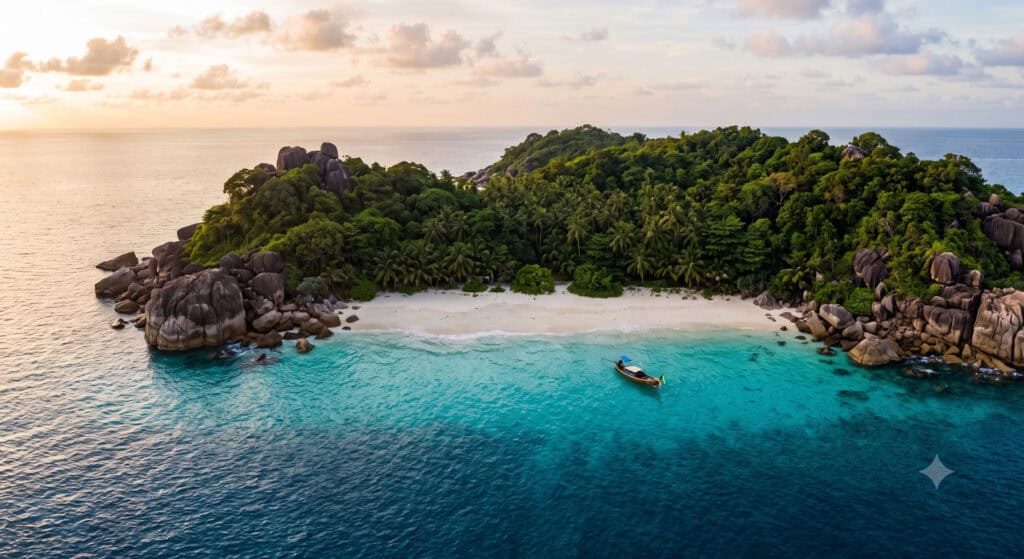
If your idea of a good afternoon is neon-blue water, house-sized granite boulders, and snorkeling that looks staged, Similan delivers it without much competition. The chain sits off Thailand’s Andaman coast inside Mu Ko Similan National Park, and that protected status is exactly why the reefs still look the way they do.
Here’s the part that trips people up: Similan closes every year, and as of mid-2026 it’s mid-closure. The 2026 season shut down on May 15 and stays closed through roughly October 15 for monsoon safety and ecosystem recovery — the Department of National Parks confirms the exact reopening date about one to two weeks out, so if you’re planning an October or November trip, check before you book flights. Thailand has also been shifting toward e-ticketing for marine parks including Similan, which usually runs through your tour operator rather than a walk-up counter.
Once it’s open, most visitors reach the islands by speedboat from the Khao Lak or Thap Lamu area, a crossing that typically runs 60 to 90 minutes depending on sea conditions. Snorkel straight off the beach on a calm day, dive for the rock formations and reef life, or hike up to one of the viewpoints for the boulder-and-bay panorama every Similan photo is built around. This is a structured day trip or liveaboard, not a DIY-wander kind of place — plan accordingly.
Koh Tao: Small Island, Serious Diving
Koh Tao sits in the Gulf of Thailand, north of Koh Phangan and Koh Samui, and has built a genuine global reputation as one of the best, most affordable places on earth to learn to dive. It’s compact enough to explore on foot or scooter in a day, with viewpoints, coves, and snorkel spots packed into a small footprint.
Get your Open Water certification (or push on to Advanced) through one of the island’s many dive schools, snorkel the sheltered bays when the water’s calm, then catch sunset from a viewpoint before a low-key dinner in town. Pick a well-reviewed operator and ask directly about group sizes and equipment maintenance — not every school on the island runs a tight ship. If you’re sensitive to noise, book lodging away from the main bar strip; Koh Tao is social, not a mega-party island, but the strip does get loud. It’s a strong fit for first-time divers, couples, and solo travelers who want beach time and an activity without long transfer days — pair it with a stop from our guide to Thailand’s best beaches if you want variety beyond diving.
Koh Lipe: Tiny, Walkable, and Genuinely That Pretty
Koh Lipe turns people into “I’ll be back every year” types. It sits in southern Thailand as part of Tarutao National Marine Park’s Adang-Rawi group, which keeps the surrounding reefs protected.
- Sunrise Beach: calm morning water, quiet early swims
- Sunset Beach: moodier and quieter, with the better evening light
- Pattaya Beach: lively and convenient — nothing like Pattaya the city, despite the name
In between them runs Walking Street, the island’s central strip of food stalls, dive shops, and cafes. It’s fully walkable, though you’ll still see the odd motorbike sidecar easing through, so stay aware after dark.
Getting there usually means flying into Hat Yai, transferring to Pak Bara Pier, then catching a boat across — check our breakdown of Thailand’s best gateway airports if Hat Yai isn’t already on your route. Ferries from Pak Bara run close to year-round, roughly 30 to 40 sailings a week depending on season, with fewer during the June-to-September monsoon stretch. Coming in from Langkawi in Malaysia works too, but that crossing gets noticeably thinner in the off-season, so build in a buffer day if it’s part of your plan.
Khai Islands: The Easiest Yes From Phuket
If you’re already based in Phuket and want turquoise water without burning a whole day on transfers, the Khai Islands are the obvious pick. These are small islands with bright water and soft sand, reachable by speedboat in about 15 minutes from most Phuket departure points.
You’ll usually see them sold as a trio — Khai Nok, Khai Nai, and Khai Nui — on the major tour platforms, and the fact that they’re bookable nearly every day is a good sign the trips are running reliably. Don’t expect resorts or nightlife here; this is swimming, a short snorkel stop when the sea’s calm, and a few simple snack stalls that come and go with the season. It’s a strong choice for families or groups staying somewhere central — see our guide to where to stay in Phuket if you’re still picking a base — who want a low-effort, high-reward half-day out.
Koh Phayam: No Cars, No Rush, No Regrets
Koh Phayam, near Ranong, is for travelers who want Thailand to feel slower and a little scruffy around the edges, in a good way. The island is genuinely car-free — the only way around is on foot, by bicycle, or by motorbike taxi, and that alone changes the whole rhythm of a day here.
Long Beach (Ao Yai) is the wide, open-sand option for a mellow swim; beyond that, it’s mostly quiet beach-hopping with water and snacks in your bag. Accommodations lean simple and cozy rather than luxury — think fan rooms and bungalows over infinity pools — and while Wi-Fi exists, it’s not why anyone comes here. Longtail boats and speedboats run from Ranong town, with the crossing taking 45 minutes to an hour depending on the boat. It’s the right call for anyone who wants tranquility over nightlife and is fine with a “swim, nap, repeat” itinerary that doesn’t apologize for itself. For help fitting a slower stop like this into a bigger trip, our Thailand trip-planning guide is a good starting point.
Koh Mak: Cycling, Calm Water, and an Easy Case of “Why Isn’t Everyone Here”
Koh Mak, out in eastern Thailand near Trat, is the quiet cousin nobody talks about enough — flat roads built for cycling, calm family-friendly beaches, and a nightlife scene that basically doesn’t exist.
Bike the island (the distances are short and the terrain forgiving), beach-hop between calm bays, or book a day boat out to nearby reefs when conditions allow. One practical note that trips up first-timers: ATMs on Koh Mak are limited and not always reliable for international cards, so arrive with more cash than you think you’ll need, even if your resort takes cards. Ferries run from Trat’s Laem Ngop Pier, roughly 45 minutes to 90 minutes depending on the operator, timed around flights landing at Trat Airport in high season. If your idea of a good trip is peaceful mornings and gentle adventure rather than late nights, Koh Mak delivers it without the crowds.
Frequently Asked Questions
What is the best lesser-known island in Thailand?
It depends on what you’re after. Similan is the standout for snorkeling and diving when it’s open, while Koh Mak and Koh Phayam are the better picks if quiet, uncrowded beach days matter more to you than activities.
How do you get to Thailand’s smaller islands?
Mostly by ferry or speedboat — speedboats cost more but save time, ferries are cheaper and slower. For Koh Lipe specifically, boats from Pak Bara Pier run close to year-round, with noticeably fewer sailings during the June-to-September monsoon window.
Are the Similan Islands open right now?
As of mid-2026, no — the park is in its annual closure, which started May 15 and runs through roughly October 15, 2026. The Department of National Parks typically confirms the exact reopening date one to two weeks ahead, so check before booking an October trip.
Is Koh Phayam actually car-free?
Yes. There are no cars on the island — getting around means walking, biking, or hopping on a motorbike taxi from the pier, which is a big part of why the island feels so much slower than Phuket or Samui.
Do I need cash on Koh Mak?
Bring more than you think. ATMs exist but are limited and don’t always play nicely with international cards, so budget cash for rentals, meals, and transport even if bigger resorts accept cards.
Can I still book a Khai Islands day trip from Phuket?
Yes — these trips run daily on the major tour platforms and remain one of the simplest half-day add-ons for anyone based in Phuket.
The hidden-island math still works in Thailand’s favor. Chase the clearest water and a real snorkeling payoff with Similan when it’s open, or trade the crowds for cycling, cash-only calm, and a slower pace on Koh Mak or Koh Phayam. Either way, going a little farther than the headline islands is still the fastest route to a beach that feels like yours.