Thailand sits right at the sweet spot of easy-to-love and easy-to-navigate: Bangkok’s energy, Phuket and Krabi’s beaches, and the history of places like Ayutthaya can all fit into one trip without feeling rushed. Good Thailand travel advice and safety habits aren’t about being paranoid — they’re about skipping the headaches so you can actually enjoy the “Land of Smiles.”
Check current advisories and border areas before you book
Before you lock in flights and hotels, do a quick reality check on the regions you’ll pass through. As of July 2026, most Western governments still advise against travel near the Thailand-Cambodia border due to an ongoing territorial conflict. The specifics vary by source: Australia’s Smartraveller names a 10km no-go zone across seven Thai border provinces (Sa Kaeo, Buriram, Si Saket, Surin, Ubon Ratchathani, Chanthaburi, and mainland Trat), the UK’s FCDO advises against all but essential travel within 20km of the border from the Cambodian side, and the U.S. State Department has issued a Level 4 “Do Not Travel” designation for the border strip specifically, while keeping Thailand overall at Level 2 (Exercise Increased Caution).
None of that means “skip Thailand.” Bangkok, Chiang Mai, Phuket, Pattaya, Koh Samui, and Krabi are operating normally with no reported disruption — the affected zone is a thin strip along a land border most tourists never go near. It matters mainly if you’re overlanding, doing a border run for a visa, or planning to explore far-flung eastern provinces. All land crossings between Thailand and Cambodia remain closed, so if your trip includes both countries, you’ll need to fly between them.
- UK FCDO Thailand travel advice: gov.uk/foreign-travel-advice/thailand
- U.S. Thailand travel advisory: travel.state.gov
Travel insurance: why it’s non-negotiable
This is the one piece of Thailand travel advice we’d never skip: buy travel insurance before you fly, full stop. At minimum, look for a policy with emergency medical coverage and medical evacuation, plus trip interruption and cancellation if you have nonrefundable bookings. Thailand’s hospitals are excellent by regional standards, but private-hospital care and medevac costs add up fast without coverage.
Read the fine print on two specific points. First, several governments note that your insurance can be invalidated if you travel against official advice — so if your itinerary brushes the Cambodia border zone or the far south, check whether your policy still covers you there. Second, if you’re renting a scooter, most standard travel insurance won’t cover injury unless you’re riding legally, which in practice means holding a valid international driving permit. Skip that step and you could be paying medical bills out of pocket after an accident that would otherwise be fully covered.
Respect the culture — it’s the fastest way to be welcomed
Thailand is famously friendly, and visitors who show basic respect get that warmth right back.
Temple etiquette (easy wins)
- Cover shoulders and knees when visiting temples — carry a light layer in your day bag.
- Take shoes off where required, and keep your voice low and phone on silent.
- Don’t climb on statues or pose in ways that could read as disrespectful.
The monarchy and local laws
Thailand takes the monarchy seriously, and criticizing it — including online posts that could be read as negative — is illegal. Even a casual comment “the way you’d talk back home” isn’t worth the risk. For a fuller picture of what’s off-limits, our guide on Thailand’s drug laws covers another area where enforcement is stricter than most first-time visitors expect.
The Thai smile and staying calm
Thailand runs on politeness and “saving face.” If something goes wrong — wrong order, taxi confusion, hotel mix-up — staying calm and smiling gets you better help, faster, than getting visibly frustrated ever will.
Common scams and how to stay safe
Thailand is generally safe for tourists, but like any popular destination, a few street-smart habits go a long way. Instead of memorizing a hundred scam stories, three rules cover most of them: know the total price before you commit to anything, use official or app-based transport when possible, and never hand over your passport as a deposit — especially for scooter or jet ski rentals, where “damage” disputes are a well-known shakedown.
If something does go sideways — theft, a scam, or you just need help communicating — Thailand’s Tourist Police are the easiest starting point and speak English. Our full breakdown on how to deal with police in Thailand covers hotlines, filing a report, and what to expect.
Nightlife safety (still fun, just smarter)
Thailand’s nightlife is legendary — enjoy it, with a few guardrails. Watch your drink, don’t accept open drinks from strangers, and don’t leave a beverage unattended. Drink spiking does happen in tourist areas, and methanol-contaminated alcohol has caused serious illness and deaths in Southeast Asia in recent years — stick to reputable venues and be cautious with very cheap mixed drinks. If you’re curious about the legal side of drinking here, our Thailand drinking age and nightlife rules guide covers the current laws venue by venue.
Money and ATM safety
ATM and card skimming incidents do happen. Use ATMs attached to bank branches when you can, shield your PIN, and avoid exchanging money at the airport, where rates are usually worse than in the city.
Getting around safely: transport and road risk
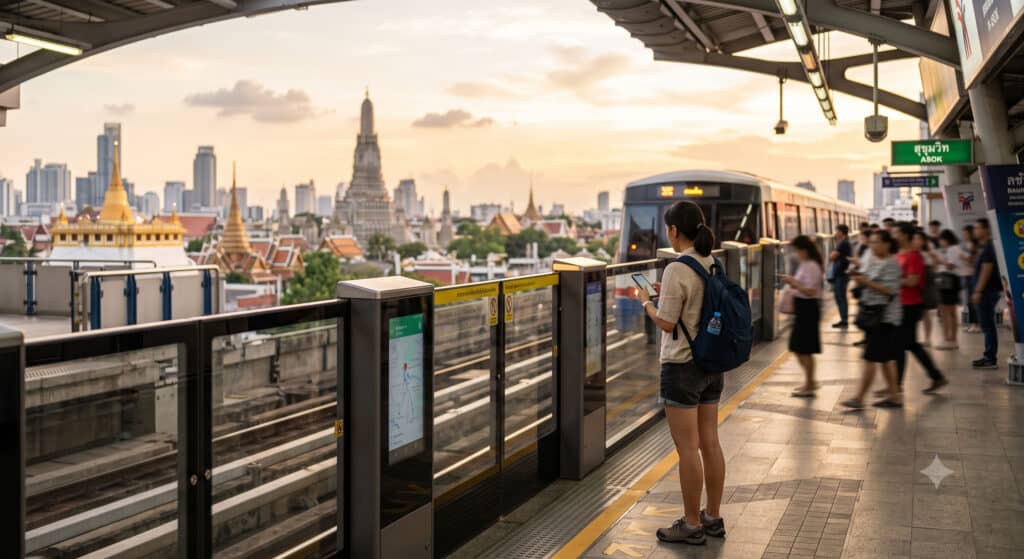
Thailand is easy to travel around — just match the transport option to the moment. In Bangkok, Chiang Mai, and most tourist areas, Grab is the default for ride-hailing and avoids the “what’s the fare, actually” negotiation entirely. For a full rundown of getting around the capital specifically, see our guide to getting around Bangkok, and if you’re still deciding where to fly into, our best airport to fly into Thailand guide compares Bangkok, Phuket, and Chiang Mai gateways.
For taxis, aim for official metered cars and confirm payment method before you go. For tuk-tuks, treat it like a mini experience rather than your everyday commute — agree on the price before hopping in, since there’s no meter.
The real safety risk: scooters and road accidents
The single biggest safety risk most tourists actually face in Thailand isn’t a scam — it’s a road accident, particularly involving motorcycles and scooters. If you do rent one, wear a helmet (it’s legally required), confirm your travel insurance actually covers scooter riding, and skip it entirely if you’re tired, inexperienced, or it’s raining hard. If you’re thinking about a longer motorbike trip rather than short local rides, our guide to motorcycle road trips through Thailand covers licensing, insurance, and route planning in more depth.
Food, health, and weather essentials
Thai cuisine is one of the best reasons to visit, and you don’t have to choose between “adventurous” and “safe.” Pick stalls that are busy — high turnover usually means fresher food — go for dishes cooked hot to order, and start mild before working your way up to Thailand-spicy. Use bottled or filtered water for drinking, and when in doubt about ice, most tourist spots use factory-made ice, but use your judgment in smaller towns.
Check with a travel clinic or your doctor for destination-specific vaccine recommendations well before you fly. Mosquito-borne illnesses like dengue don’t have a routine traveler vaccine, so prevention is mostly about habits: repellent, covered skin during peak mosquito hours, and screened or air-conditioned rooms where possible. Thailand’s heat and humidity are no joke either — pace physical activity and hydrate more than feels necessary, especially in the first few days before you acclimate.
One easy-to-miss rule: keep your distance from monkeys. They’re entertaining from afar, but contact carries rabies risk — if you’re bitten or scratched, wash the wound immediately and seek medical care rather than waiting it out.
Weather-wise, Thailand’s rainy season generally runs May through October, with timing that shifts a bit in the south. Northern Thailand, especially around Chiang Mai, can also see seasonal haze and air pollution spikes — if you’re sensitive, check the daily AQI before heading out.
FAQ: Thailand travel advice and safety
Is Thailand safe to visit in 2026?
Yes, for the vast majority of the country. Bangkok, Phuket, Chiang Mai, Krabi, and the islands are operating normally. The main exception is a narrow strip along the Thailand-Cambodia border, where several governments currently advise against travel due to an active territorial conflict.
Do I really need travel insurance for Thailand?
Yes. Look for emergency medical coverage and medical evacuation at minimum, plus trip cancellation if you have nonrefundable bookings. Confirm your policy still applies if your route touches an advisory zone, and that it covers scooter riding if you plan to rent one.
What are the most common scams tourists run into?
Unmetered taxi or tuk-tuk overcharging, “closed” attractions that redirect you to a commission shop, jet ski or scooter rental “damage” disputes, and passport-as-deposit requests top the list. Confirming prices up front and never handing over your passport avoids most of them.
Is it safe to drink tap water in Thailand?
No — stick to bottled or filtered water. Most tourist-area ice is factory-made and generally fine, but use your judgment at smaller local spots.
Is renting a scooter in Thailand worth the risk?
It can be, if you’re an experienced rider with an international driving permit, a helmet, and insurance that actually covers you. Road accidents are the most common serious safety issue tourists face in Thailand, so this isn’t the place to wing it.
Are there areas of Thailand tourists should avoid?
Yes — the Thailand-Cambodia border strip (avoid roughly 10-20km depending on the source) and Thailand’s three southernmost provinces, Yala, Pattani, and Narathiwat, due to long-running unrest. Neither affects the country’s major tourist destinations.
Thailand rewards travelers who come prepared and then relax into the ride. With basic cultural awareness, a few safety habits, and the right insurance in your back pocket, you’re free to focus on the parts that make people fall in love with this country in the first place.