
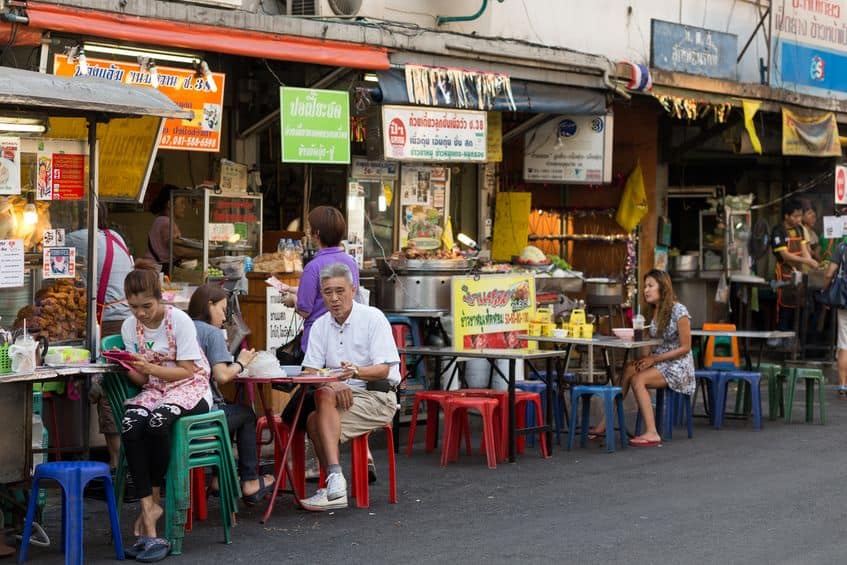
There are few travel wins more satisfying than landing in Thailand, stepping outside into that warm tropical air… and realizing you can actually navigate everything—even if you don’t speak Thai.
Here’s the truth: in tourist-heavy areas (Bangkok, Chiang Mai, Phuket, Krabi, Koh Samui, Pattaya, etc.), you’ll meet plenty of people with some English. But once you hop into a local taxi, order from a street stall, or ask for help at a small-town bus station, English can be hit-or-miss.
The good news? You don’t need to be fluent. If you bring the right phone tools, keep your sentences simple, and learn a handful of Thai “magic words,” you’ll get around smoothly—and you’ll earn a lot of smiles along the way.
Step 1: Use English… but use “simple English”
A lot of travelers accidentally make things harder by speaking in long, complex sentences. If you keep your phrasing short and clear, you’ll get better results—especially with people who learned English mainly through work.
Better:
- “How much?”
- “Where is the bathroom?”
- “Can you help me?”
- “I want to go here.” (and show your phone)
Not as helpful:
- “Hi! Sorry to bother you, but I was wondering if you might be able to tell me approximately how much this costs…”
Also: you don’t need to talk loudly. Just speak clearly, drop the slang, and pause between key words.
Step 2: Your phone is your superpower (apps that actually matter)
Google Translate (download it before you fly)
Google Translate is the single best “language barrier” tool for Thailand because it works in multiple ways:
- Camera mode: point at menus/signs and translate instantly
- Conversation mode: helps with back-and-forth
- Offline language packs: huge when your signal is weak or you’re saving data
Pro tip: star your most-used phrases in the app (your personal “phrasebook”) so you’re not fumbling at the worst moment—like when you’re hungry.
Google Maps (download offline maps)
Offline maps are clutch for travel days, island hopping, and those “why is my phone on EDGE?” moments.
Google’s official instructions for Offline maps are still current and easy to follow.
Best Thailand map habits:
- Download offline maps for Bangkok + any side-trip regions
- Save important pins: hotel, nearest BTS/MRT, favorite café, ferry pier
- Screenshot your hotel name + address (bonus points if it’s in Thai)
Step 3: The “Thai text” trick that saves taxi rides
Thailand uses Thai script everywhere—and that’s where many tourists get stuck.
Even if your driver understands some English, Thai text is often the difference between a perfect ride and a confusing one.
Do this instead:
- Pull up your destination in Google Maps.
- Switch to Thai language (or show the place listing with Thai text).
- Point to the destination and say: “pai tee nee” (ไปที่นี่) = “go here.”
It’s normal for a driver to study your screen for a bit. That’s usually a good sign—they’re double-checking, not scamming.
Step 4: Getting around Bangkok (BTS + MRT are your best friends)
Bangkok traffic is… famous. When you can take rail, take rail.
- BTS Skytrain: official route/timetable tools are active on the BTS site. bts.co.th
- MRT: MRTA provides official info on lines and service. mrta.co.th
If you’re staying central, a simple combo of BTS/MRT + short Grab/Bolt rides is often the smoothest plan.
Step 5: Ride-hailing (a stress-free upgrade)
When you don’t want to negotiate, don’t want surprises, and want to reduce language friction, ride-hailing is a win.
- Grab is active in Thailand (official Thailand site). Grab
- Bolt shows active service in Bangkok on Bolt’s official city page. Bolt
Tip for pickup points: use malls/hotels as pickup locations. “Random curb on a busy road” is where confusion thrives.
Step 6: Learn a few Thai words (you’ll feel like a wizard)
Thai is a tonal language, so pronunciation isn’t always intuitive—but don’t let that intimidate you. If you try even a little, locals usually respond warmly.
The polite endings (easy mode)
Thai often adds a polite word at the end:
- Men: ครับ (khráp)
- Women: ค่ะ (khâ)
If you forget, it’s okay—your effort still counts.
Thailand phrase cheat sheet (tourist-essential)
Below are useful, commonly understood phrases with Thai script + simple phonetics.
Greetings & basics
- Hello — สวัสดี (sà-wàt-dee)
- Male: สวัสดีครับ (…khráp)
- Female: สวัสดีค่ะ (…khâ)
- Thank you — ขอบคุณ (khàawp khun)
- Male: ขอบคุณครับ (…khráp)
- Female: ขอบคุณค่ะ (…khâ)
- Sorry / Excuse me — ขอโทษ (khǎaw thôht)
- Yes — ใช่ (châi) / (polite ending optional)
- No / Not — ไม่ (mâi)
The one you’ll use every day
- Bathroom? — ห้องน้ำอยู่ไหน (hông náam yùu nǎi?) = “Where’s the bathroom?”
Short version: ห้องน้ำ? (hông náam?)
Money & shopping
- How much? — เท่าไหร่ (thâo rài?)
- Too expensive — แพงไป (phɛɛng bpai)
- Can you make it cheaper? — ลดหน่อยได้ไหม (lót nòi dâi mái?)
Taxis & directions
- Use the meter? — ใช้มิเตอร์ไหม (chái mee-dter mái?)
- Turn left — เลี้ยวซ้าย (líao sâai)
- Turn right — เลี้ยวขวา (líao kwǎa)
Food (the fun stuff)
- Water — น้ำ (náam)
- Beer — เบียร์ (bia)
- Chicken — ไก่ (gài)
- Rice — ข้าว (khâao)
- Spicy — เผ็ด (phèt)
- Not spicy — ไม่เผ็ด (mâi phèt)
- Delicious — อร่อย (a-ròi)
Classic Thai vibe
- Never mind / It’s okay — ไม่เป็นไร (mâi bpen rai)
Mini numbers (so you can sanity-check prices)
- 1 — หนึ่ง (nùeng)
- 2 — สอง (sǎawng)
- 3 — สาม (sǎam)
- 4 — สี่ (sìi)
- 5 — ห้า (hâa)
- 10 — สิบ (sìp)
- 20 — ยี่สิบ (yîi sìp)
- 50 — ห้าสิบ (hâa sìp)
- 100 — หนึ่งร้อย (nùeng r้อย)
- 500 — ห้าร้อย (hâa r้อย)
- 1,000 — หนึ่งพัน (nùeng phan)
You don’t need perfection—this is mostly for recognizing numbers when someone says them.
A few cultural tips that make everything easier
- Shoes off: common in homes and temples; follow the crowd.
- Temple clothing: cover shoulders and knees; bring a light scarf/shawl.
- Keep it calm: Thailand tends to value polite, low-drama interactions—being visibly frustrated usually makes things slower, not faster.
Safety note
Thailand is generally very welcoming to tourists, but conditions can change—especially near borders or during periods of unrest.
The U.S. State Department’s Thailand page advises caution and specifically flags areas along the Cambodian–Thai border due to armed conflict, among other regional risks.
If you’re heading anywhere remote or near border provinces, it’s smart to check current advisories close to departure.
FAQ: Quick related questions
Things to know before going to Thailand (quick tips)
- Download Google Translate + offline Thai, and offline Google Maps before you go.
- Carry some cash (small bills are helpful for markets and street food).
- Haggling is normal in markets—do it with a smile and keep it respectful.
- Eat beyond Pad Thai: try massaman curry, tom yum, green papaya salad (som tam), pad krapow, mango sticky rice.
What is Thailand like?
Thailand is vibrant, friendly, and full of contrasts: peaceful temples, chaotic night markets, dreamy beaches, and some of the best “eat something amazing for $3” moments on Earth. In busy tourist areas, you’ll find plenty of English support—but outside those zones, your apps + a few Thai phrases will make your trip dramatically smoother.