Muay Thai training in Thailand pulls people in for one simple reason: watching a fight from the stands makes you want to feel what it’s like to throw those elbows yourself. Thousands of travelers show up every year to test that curiosity at a real Thai gym—sweaty, loud, and more addictive than most people expect.
Before you book anything, here’s the advice that matters most: don’t walk in with a chip on your shoulder. Thai gyms are welcoming, but Muay Thai culture runs on humility. Show up acting like the main character and you’ll get a fast, friendly correction—usually delivered with a smile and a hard round of pads.
This guide covers what training is actually like, how to pick a camp that fits your goals, the traditions worth understanding before you bow to your first kru, real costs for 2026, and a short list of gyms worth your time.
What Muay Thai Training in Thailand Is Actually Like
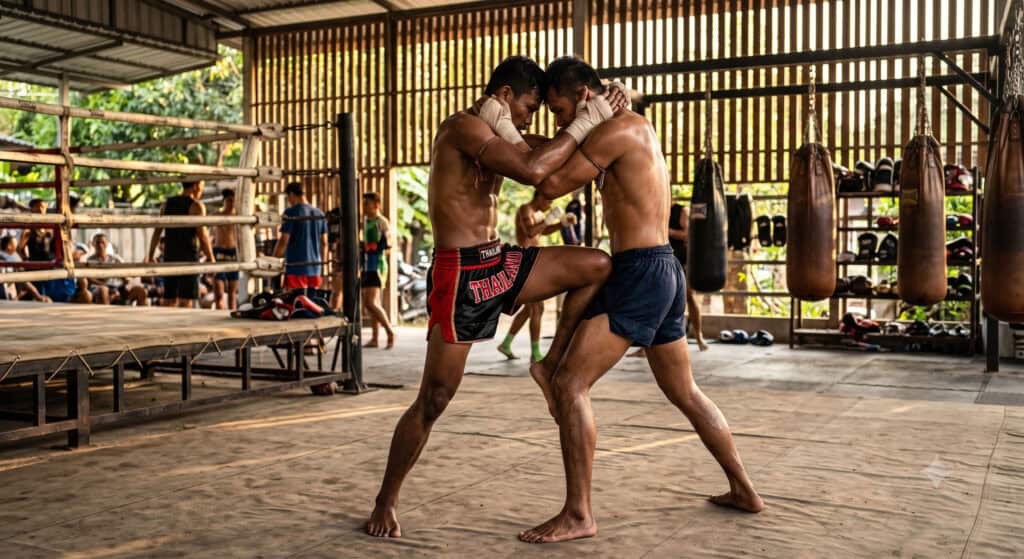
On the flight over, I watched A Prayer Before Dawn, a film about a British fighter who survives a Thai prison through Muay Thai. It’s intense enough to talk anyone into taking up chess instead. The reality of training is less dramatic and more physical: most Thai gyms aren’t spa-like. You’re not stepping into an air-conditioned studio that smells like eucalyptus. You’re stepping into a hot, hardworking space where people train seriously, often twice a day, and it smells exactly like that.
A typical day runs morning and afternoon sessions—warmup, skipping rope, technique, pads, bag work, and clinch or sparring—with recovery built around food, a nap, and maybe an ice bath if the camp has one. Expect a lot of kicks, since Muay Thai isn’t just boxing with extra steps, plenty of conditioning, and some running if the gym takes fitness seriously. You won’t get adopted by a mystical master who trains only you, and you definitely won’t be asked to break concrete with your fists. What you will find, increasingly, is more camps blending Muay Thai with yoga and mobility work, which has opened the sport up to more women and first-timers than it used to welcome.
Choosing the Right Camp for Your Goals
Picking a camp is less about finding the “best gym in Thailand” and more about finding the best match for what you actually want. If your goal is fitness, weight loss, or confidence, look for structured programs with friendly coaching and a supportive group vibe. If you want to learn technique properly, smaller-to-mid gyms with real trainer-to-student attention tend to beat the mega-camps. If you’re chasing fight training or serious clinch work, you need a fighter-heavy gym with regular sparring. And if you want training plus an actual vacation, islands and beach towns deliver that, though the popular ones get crowded in high season.
You’ll also decide between Train & Stay packages, which bundle training and accommodation—sometimes meals—into one booking, or DIY, where you book your own room nearby. DIY costs less and gives you more control, but Train & Stay removes a lot of the planning headache if you’d rather show up and start hitting pads.
Muay Thai Culture and Etiquette Worth Knowing
Muay Thai carries real cultural weight, and a few basics go a long way. The wai—hands together with a respectful nod—shows up constantly, and your kru is treated with genuine respect inside the gym. Before fights, you’ll see wai kru ram muay, a ritual dance performed to honor teachers, family, and the sport itself. Sinbi Muay Thai, for instance, teaches wai kru to students on Saturday mornings as part of regular training.
Etiquette in the gym is simple: show up on time, listen more than you talk, don’t correct other students unless someone asks, thank your trainers, and keep your gear as clean as sweat allows. None of this is complicated, but skipping it is the fastest way to get the tourist treatment instead of the real one.
Where to Train: Six Camps Worth Knowing About
Tiger Muay Thai is one of the most recognized gyms in the world, offering Muay Thai, MMA, BJJ, boxing, strength and conditioning, and yoga under one roof. It publishes clear pricing: a week of all-inclusive training runs around 5,500 THB, a month around 13,500 THB, and private sessions land near 700–800 THB per hour, so confirm the current rate before booking since these shift. It’s the right call for beginners who want structure and options, and anyone who wants a full “Muay Thai hub” experience in Phuket—see our guide to where to stay in Phuket for a base near the gym.
Diamond Muay Thai built its reputation on serious training combined with island life. Its Train & Stay packages run roughly 18,000–24,000 THB a month depending on room type, and the social scene makes it easy to arrive solo and leave with a crew. Time your trip right and you’re also on the island known for the Full Moon Party—worth building into a longer stop with our Thailand island hopping guide.
For a slower, more rural feel, Battle Conquer sits in rice-field country with a pool, an ice plunge schedule, and a cafe that doubles as a co-working space. It blends Muay Thai with wellness rather than pure fight training, which makes it a strong pick if you want a reset alongside your workouts.
Sityodtong has been producing serious fighters since 1959, and it still feels like a real gym rather than a resort. Drop-in sessions run around 400–500 THB, with monthly memberships near 7,000 THB—good for anyone who wants authenticity over polish. If you go this route, check our guide to where to stay in Pattaya for a neighborhood that won’t fight you on sleep.
Two more worth a look: Sinbi Muay Thai in Rawai runs two group sessions daily and welcomes beginners with structured pad work, while AKA Thailand positions itself as a higher-end “fight resort” with Muay Thai, MMA, and fitness amenities layered in.
What It Actually Costs in 2026
Training costs swing a lot based on location, season, and whether you go Train & Stay. Tiger Muay Thai runs about 13,500 THB a month for training alone. Diamond’s Train & Stay packages land around 18,000–24,000 THB monthly. Sityodtong is the budget end at roughly 400–500 THB per drop-in session. On top of training, factor in a simple room near the gym, cheap and plentiful street food, and local transport. If you rent a scooter, budget for fuel and real safety gear, and actually wear the helmet—our Thailand motorcycle guide covers the rental red flags worth knowing before you sign anything.
A rough framework: budget DIY covers training, a basic room, and street food. Mid-range adds Train & Stay plus the occasional taxi or western meal. Comfort adds nicer accommodation, more private sessions, and massages. Pick one splurge category—private sessions, a nicer room, or nightlife—rather than trying to have all three at once.
Do You Need Travel Insurance for Muay Thai Training?
Short answer: yes. Muay Thai is full-contact, and even a mellow pad session can end in a rolled ankle, a split eyebrow, or a jammed finger that needs a proper look. Thai hospitals are excellent, especially in Bangkok and Phuket, but a private clinic visit for an X-ray, stitches, or antibiotics adds up fast when you’re paying cash.
Check that your policy explicitly covers adventure or combat sports before you fly. Cheaper plans quietly exclude martial arts training or anything with “boxing” in the name. Some camps, Tiger Muay Thai among them, ask new arrivals for proof of coverage before letting them onto the mats, so it’s worth sorting out before you land.
Staying Longer: Visas for Muay Thai Training
Visa rules shift, so confirm details with an official source or your nearest Thai embassy before you commit to anything. Two paths come up most often: education-style arrangements through certain schools, and Thailand’s Destination Thailand Visa, a longer-stay option that now explicitly recognizes Muay Thai training as a qualifying activity for applicants enrolled in a registered camp. Some gyms, Khongsittha Muay Thai among them, advertise education-visa-style packages directly on their sites if you want help navigating the paperwork.
Muay Thai Training in Thailand: Your Questions Answered
How much does Muay Thai training cost in Thailand?
Expect anywhere from 400 THB for a single drop-in session at a budget gym like Sityodtong to 13,500 THB or more per month at a full-service camp like Tiger Muay Thai. Add accommodation, food, and local transport, and a modest monthly budget runs from a few hundred to over a thousand US dollars depending on how comfortable you want to be.
Do I need experience before I start training?
No. Most camps run beginner classes specifically for people who’ve never thrown a kick, and trainers are used to working with total newcomers. Just be upfront about your experience level so you get placed in the right group.
How long should I stay to see real progress?
A week gives you a taste. Two to four weeks is enough to build real technique and adjust to the training rhythm. Anything beyond that starts producing the kind of change people travel here specifically to chase.
What should I pack for a Muay Thai trip?
Bring your own hand wraps and gloves if you have them. Most gyms rent gear, but your own is more comfortable and more hygienic. Light training clothes, sunscreen, bug spray, and a refillable water bottle round out the essentials.
Can I get a visa specifically for Muay Thai training?
Yes. Thailand’s Destination Thailand Visa now explicitly lists Muay Thai training at a registered camp as a qualifying activity, and some gyms offer education-visa-style packages of their own. Confirm current requirements with an official source before you apply.
However long you stay, the training itself is the easy part to plan. What changes people is showing up consistently, listening to trainers who’ve spent decades doing this, and letting the culture around the sport teach you as much as the sport itself does.