
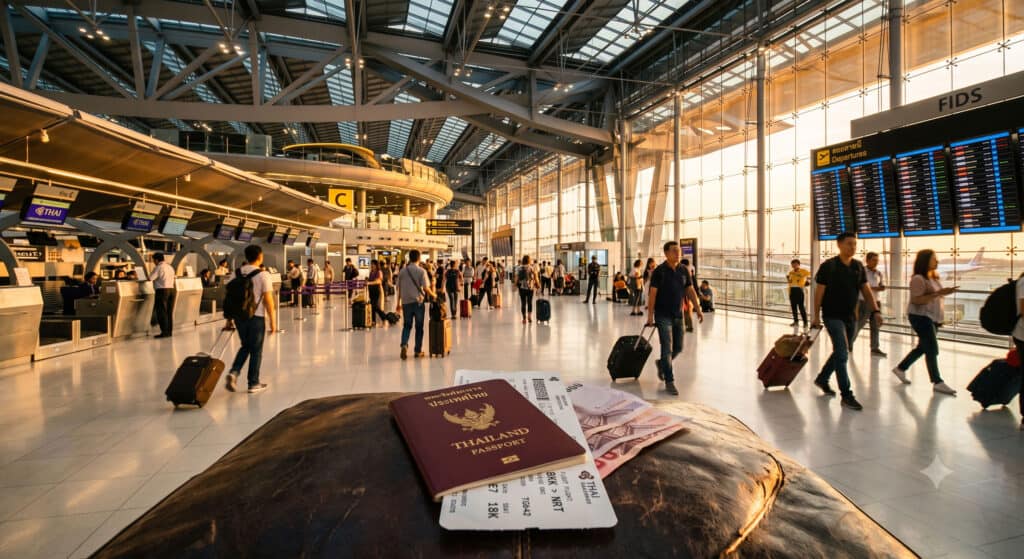
Somewhere between a headline about Thailand’s new 300-baht tourist fee and a friend swearing they got charged extra at Suvarnabhumi, the real story got lost. Here’s the short version: one of these fees is confirmed and already sitting inside your airfare. The other one — the one generating most of the headlines — still hasn’t launched. If you’re trying to nail down the Thailand tourist fee 2026 situation before you book, here’s exactly what’s live, what’s still just a proposal, and what flying into Thailand actually costs right now.
The 300-Baht Tourist Fee: Why You Probably Haven’t Paid It Yet
Thailand’s Cabinet approved a tourist entry fee in principle back in February 2023 — a flat 300 baht for travelers arriving by air. Since then it’s been delayed, revived, and delayed again. The government pushed the rollout back in 2025 citing weak tourist arrivals and an economy that couldn’t absorb another cost increase, then floated a February 2026 start date that came and went without a formal launch. As of mid-2026, the fee is still awaiting a final Cabinet decision and an officially confirmed collection method. Nothing is being charged at immigration, and nothing has been added to airfares for this particular fee — despite what a few clickbait headlines have implied.
When it does eventually launch, the plan is for 70 baht of the 300 to fund basic accident and medical coverage that kicks in the moment you land, with the rest going toward maintaining tourist sites and general infrastructure. Officials have said it’ll work like Thailand’s visa requirements and other entry rules that get adjusted without much warning — collected through your airline ticket rather than a separate cash line at the border. Given how many times this fee has already missed its own start date, treat any “confirmed” launch announcement with mild suspicion until you see it reflected in an actual airfare.
What’s Actually Live: The New Airport Departure Fee
While the entry fee sits in limbo, Thailand’s airport departure fee already went up. On June 20, 2026, Airports of Thailand (AOT) raised the international Passenger Service Charge from 730 baht to 1,120 baht — a jump of 390 baht, or roughly 53%. It’s the biggest increase to this charge in years, and unlike the tourist entry fee, it’s not a proposal. It’s live, and it’s already built into what you paid for your ticket if you booked an international departure from Thailand after that date.
This is the fee actually driving up the cost of flying into and out of Thailand this year, regardless of what happens with the entry fee. You won’t see a separate charge pop up at check-in or a cash collection at the gate — AOT folds the Passenger Service Charge into the airfare at the time of purchase, the same way it always has. If you’re still comparing routes, it’s worth checking cheap flights to Thailand against your dates now that this increase is priced in everywhere.
Thailand Airport Fees by Airport: Where the 1,120 Baht Applies
The new rate isn’t limited to Bangkok. It applies evenly across every airport AOT operates, so there’s no cheaper gateway to route around it:
- Suvarnabhumi Airport (BKK), Bangkok
- Don Mueang Airport (DMK), Bangkok
- Phuket International Airport (HKT)
- Chiang Mai International Airport (CNX)
- Mae Fah Luang Chiang Rai International Airport (CEI)
- Hat Yai International Airport (HDY)
Domestic Passenger Service Charges are unaffected and stay at 130 baht per person, so a Bangkok-to-Phuket hop won’t cost more because of this change. The increase only hits international departures, which is where most first-time visitors feel it — usually on the flight home rather than the flight in, since it’s a departure charge. If you haven’t settled on which Thai airport to fly into, this fee doesn’t change that decision at all — it’s the same at every one of them.
Before and After: What Flying Into Thailand Actually Costs
Here’s the cost breakdown side by side, since this is the part most people are actually trying to figure out before they book:
| Fee | Old Rate | New Rate (2026) | Status |
|---|---|---|---|
| International departure fee (PSC) | 730 baht | 1,120 baht | Live since June 20, 2026 |
| Domestic departure fee (PSC) | 130 baht | 130 baht | Unchanged |
| Tourist entry fee (air arrivals) | None | 300 baht (proposed) | Not yet collected — pending Cabinet approval |
In plain terms: your round-trip cost to Thailand went up by roughly 390 baht (about $11 USD) because of the departure fee increase, and that’s already reflected in current airfares. The 300-baht entry fee would add roughly $9 USD more on top of that if and when it launches — but budgeting for it today means padding a cost that may not materialize for months, or may look different by the time it does.
When Will the 300-Baht Fee Actually Start?
Honestly, nobody outside the Thai Cabinet knows for sure. The fee has now missed at least three separate target windows since it was first floated in 2023, and officials have cited soft tourist arrivals and unresolved collection details for the repeated delays, alongside open questions about how land and sea arrivals should be treated differently from flights. The most recent guidance points toward a mid-to-late 2026 rollout, but that’s been the guidance before.
The practical takeaway: don’t restructure your trip budget around a fee that isn’t charging anyone yet. Keep an eye on official Thai government or embassy announcements in the weeks before you fly, the same way you’d double check anything else that’s currently “under review,” like the ongoing discussion around Thailand’s 60-day visa exemption program. Both are examples of Thailand policy that sounds settled in headlines well before it’s settled in practice.
Frequently Asked Questions About Thailand’s Tourist and Airport Fees
Has Thailand’s 300-baht tourist fee started?
No, not as of mid-2026. The fee was approved in principle back in 2023, but the government has delayed its rollout more than once, citing weak tourist arrivals and unresolved collection details. It’s still awaiting a final Cabinet decision and a confirmed start date, so nothing is being charged at the border or added to airfares for this fee yet.
How much is Thailand’s new airport departure fee, and when did it start?
The Passenger Service Charge for international departures rose from 730 baht to 1,120 baht on June 20, 2026 — a jump of 390 baht, or about 53%. It applies to every international departure from Thailand’s six state-run airports and is already built into ticket prices.
Which airports charge the 1,120 baht departure fee?
All six airports operated by Airports of Thailand: Suvarnabhumi and Don Mueang in Bangkok, Phuket, Chiang Mai, Mae Fah Luang Chiang Rai, and Hat Yai. The rate is identical at every one of them, so flying through a different airport won’t lower what you pay.
Do I pay these fees separately, or are they already in my ticket?
The departure fee is built into your airfare at the time of purchase, so you won’t be asked for cash at the gate. If the 300-baht entry fee eventually launches, officials have said it will work the same way — added to the airfare rather than collected as a separate charge at immigration.
Does the higher departure fee affect domestic flights within Thailand?
No. The Passenger Service Charge for domestic flights stays at 130 baht per person. The increase applies only to international departures.
Will I need travel insurance once the entry fee’s insurance component launches?
The proposed fee sets aside 70 baht per traveler for basic accident and medical coverage, but that’s a thin safety net for anything beyond a minor incident. Most travelers still carry a separate travel insurance policy for hospital stays, trip cancellation, and medical evacuation, since serious injuries or illness in Thailand can run into thousands of dollars without one.
Thailand’s fee situation will likely shift again before either charge is fully settled. For now, the departure fee is the one actually affecting your bottom line, and it’s already baked into whatever fare you booked. Check back closer to your travel dates if the entry fee is still hanging in the news when you’re ready to lock in flights.