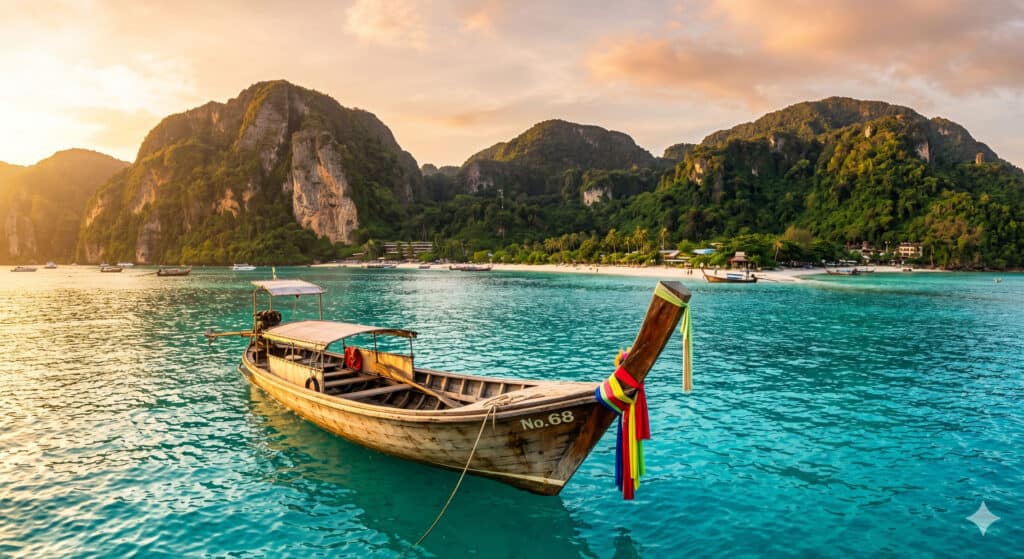
There are famous islands, and then there are the Phi Phi Islands. The kind of place where limestone cliffs shoot straight out of turquoise water and the beach looks like someone ran it through Photoshop. I’ve seen a lot of Thai coastline, and Phi Phi still stops me cold every time I arrive by ferry. It’s that dramatic. But visiting Phi Phi in 2026 takes a bit more planning than it used to—especially if Maya Bay is on your list. This guide covers everything: getting there, the best beaches, what’s changed at Maya Bay, where to eat and sleep, and how to enjoy Phi Phi without accidentally stepping into a fire jump rope show.
Phi Phi 101: Two Islands, One Very Different Vibe
When people say “Phi Phi,” they usually mean one of two islands. Koh Phi Phi Don is the inhabited one—home to Tonsai Village, all the hotels, restaurants, bars, and the main pier. Koh Phi Phi Leh is the uninhabited twin: a protected national park island home to Maya Bay, a few incredible lagoons, and some of the best snorkeling in the Andaman Sea. Most travelers base themselves on Phi Phi Don and take day trips to Phi Phi Leh by boat.
The island pair sits roughly between Phuket to the northwest and Krabi to the northeast—about 45 km from each—which makes it a natural stop on any Andaman coast trip. If you’re planning a longer southern Thailand loop, our Andaman Sea 7-day itinerary from Phuket to Koh Lanta includes Phi Phi as a full day or overnight stop and is worth bookmarking now.
How to Get to the Phi Phi Islands (Ferry vs. Speedboat)
Both Phuket and Krabi have regular ferry service to Tonsai Pier on Phi Phi Don. From Phuket, ferries depart most days from Rassada Pier—travel time is typically around 1.5 to 2 hours depending on sea conditions. From Krabi, boats leave from Klong Jilad Pier with a similar crossing time. Tickets are cheap, boats run multiple times daily during peak season, and it’s genuinely the most hassle-free option for solo travelers and couples.
Speedboats cut the crossing time roughly in half and are the go-to option for day trips and island-hopping tours. If you’re booking a Phi Phi day trip from Phuket or Krabi, you’ll almost certainly be on one. Fair warning: speedboats are significantly bouncier when the Andaman Sea decides to put on a show. If you’re prone to seasickness even a little, take a tablet before boarding and grab a seat near the center of the vessel—not the back.
One more thing worth knowing: during monsoon season (roughly June–October), sea conditions can cause delays or outright cancellations. Don’t book a same-day ferry if you’re connecting to a flight out of Phuket or Krabi that evening. Build in buffer time. And if you’re planning a full Andaman leg, our roundup of things to do in Krabi is worth a look for the days before or after your Phi Phi stay.
Getting Around Phi Phi Don
Good news: there are no cars on Phi Phi Don. The main village area (Tonsai/Loh Dalum) is compact and walkable in 10 minutes flat. To reach the outer bays and beaches, you’ll use longtail boats—the island’s unofficial water taxi system—or hike. The hikes can be hot and steep, but they reward you with views that belong on travel magazine covers. Bring water. Wear shoes you don’t mind destroying.
The Best Beaches in Phi Phi (and What Each One Is Actually Like)
Phi Phi’s beaches range from “packed tourist scene” to “I cannot believe this exists.” Here’s an honest breakdown. For a broader comparison across Thailand, our guide to the best beaches in Thailand puts Phi Phi in context with the rest of the country’s coastline.
Tonsai Beach sits right at the main pier—convenient, lively, and the center of everything. Good if you want to be close to restaurants and tours, not ideal if you came for quiet. Loh Dalum Bay is the social beach, facing north with flat, shallow water and a full-throttle beach bar scene that runs into the night. Long Beach on the southeast coast is the consistent favorite for people who want a more relaxed day—fewer tours, better swimming, and that “I found a good one” feeling. You’ll need a short longtail ride from Tonsai to get there. Monkey Beach is famous and worth a quick stop, but keep food out of reach—these monkeys have been doing this longer than you have, and they are faster.
Maya Bay in 2026: What’s Changed and What to Expect
Maya Bay is still one of the most stunning places I’ve been in Thailand. It’s also the most changed. After years of closure and careful rehabilitation, it reopened with strict rules that are now consistently enforced—and honestly, it’s better for it.
Here’s what you need to know for 2026:
- Annual closure: Maya Bay closes every year from August 1 through September 30 and reopens October 1. Plan accordingly.
- No swimming in the bay: Swimming is prohibited to protect the recovering reef. You can stand, walk, take photos—just not swim.
- Boats dock at Loh Sama Bay: Boats no longer enter Maya Bay directly. Visitors disembark at nearby Loh Sama Bay and walk to Maya Bay via a designated path.
- Visitor limits and timed entry: Officials have capped daily visitors at around 4,125, split into entry rounds with time limits. Entry costs 400 baht for adult foreigners and 200 baht for children, payable at the park checkpoint or often bundled into your tour price. Arrive with a licensed operator to avoid issues at the gate.
- E-ticketing rollout: Thailand has been piloting a digital entry system for Hat Noppharat Thara–Mu Ko Phi Phi National Park. Confirm booking requirements through your tour operator before heading out—this may require advance registration.
Bottom line: Maya Bay is absolutely worth it. Go before 9 AM if you can, travel with a licensed tour operator who knows the procedures, and don’t expect to float around the shallows like it’s 2005. The bay is more protected now—and it shows. The water is clearer than it’s been in years.
Snorkeling, Scuba Diving, and Boat Days
Phi Phi is a genuine playground for anything that happens in the water. A standard day trip will hit a handful of snorkeling spots, lagoons, cliffs, and beaches—and you can customize based on whether you want an action-packed itinerary or a slow float-and-drift kind of day.
If you’re certified for scuba, Phi Phi diving is well worth it. Visibility can be excellent, the reef life is diverse, and dive sites like Hin Daeng and Hin Muang (reached from Phi Phi or Koh Lanta) are world-class walls that serious divers travel specifically to see. Island Divers on Phi Phi Don is one of the better-known dive centers on the island and runs both PADI courses and guided trips. Not certified? Most shops offer try-dive experiences in calm, protected conditions—a reasonable intro before committing to a full course.
Kayaking is another underrated option, especially early morning before the midday heat settles in. Paddling around the coastline of Phi Phi Don with flat water and no tour boats yet? That’s a good morning.
Where to Eat and Drink on Phi Phi
The food scene on Phi Phi is bigger than you’d expect for a small island. You’ve got Thai classics, fresh seafood, good coffee spots, and the inevitable international comfort food (because sometimes after three days of heat, you just want a burger). A few consistently recommended spots: P.P. Wang Ta Fu for Thai food and seafood, Garlic 1992 for a reliable mix of Thai and international plates, and several café options around Tonsai for coffee and lighter meals. Island businesses can be seasonal, so verify hours in the shoulder season before making a dedicated trip.
Street food stalls near Tonsai Village are worth hitting for lunch—pad thai, grilled skewers, and mango sticky rice at prices that will make you reconsider ever going home.
Phi Phi Nightlife: Fire Shows, Beach Bars, and the Bucket Situation
Phi Phi nights are a whole personality. Loh Dalum Beach is ground zero: beach bars, fire jump rope shows, buckets of mixed drinks, and a crowd that ranges from backpackers to families who didn’t entirely read the reviews before booking. If you’re not a party person, the scene is still worth a wander after dark—it’s genuinely entertaining. Just pace yourself, drink water, and understand that the bucket drinks are stronger than they look in a tropical heat context.
Slinky Beach Bar is one of the most talked-about beach party stops on the island, and Phi Phi Reggae Bar is the reliably chaotic spot where tourists can watch (or join) impromptu boxing matches. If you want a more organized event, Ibiza House Phi Phi runs recurring adults-only pool parties a few times a week. For something entirely different after Phi Phi, the Full Moon Party on Koh Phangan is the other big name on the Thai party circuit—worth knowing about if you’re extending the trip.
The fire jump rope shows at Loh Dalum look thrilling, and they are—to watch. Participating after two bucket drinks is a different story. Watch, cheer, keep your eyebrows attached to your face.
Where to Stay on Phi Phi (Pick Your Vibe First)
Accommodation on Phi Phi breaks down pretty cleanly by location and what kind of trip you want.
Stay near Tonsai/Loh Dalum if you want easy access to restaurants, tour booths, and nightlife—and don’t mind being in the louder part of the island. Phi Phi Villa Resort is a long-standing beachfront option here. Stay at Long Beach if you want a beautiful beach setting with a quieter night’s sleep—a longtail ride from Tonsai keeps you connected without putting you in the middle of the party. Phi Phi Long Beach Resort & Villa is an established option in this area. For a full resort-style escape, SAii Phi Phi Island Village sits in a secluded bay and provides transfers from Tonsai Pier—note that rough seas can affect longtail service in certain seasons, so factor that into planning. Party hostel crowd: Blanco Beach Bar and Blanco Central Hostel are both active on major booking platforms.
Best Time to Visit Phi Phi (Honestly)
The sweet spot is November through March—dry, sunny, and the most reliable weather for ferries and open water. April and May are hot but still beautiful; just schedule beach time early and late, not midday. From June through October, the Andaman Sea gets rougher, some tours are suspended, and Maya Bay closes for its annual two-month rest. If your dates are fixed in the monsoon window, it’s not a deal-breaker—just research current sea conditions and go in with flexible expectations. And regardless of when you go: reef-safe sunscreen, a dry bag for your phone, motion sickness tablets, and water shoes. These are not optional. Especially the sunscreen.
If you want to compare Phi Phi against other Andaman options, our Thailand island hopping guide breaks down the full Andaman and Gulf coast by season and vibe—useful if Phi Phi is one stop on a longer route.
How to Visit Phi Phi Responsibly
Phi Phi is a national park. The conservation rules have gotten stricter for good reason—the reef and bay system took serious damage during the mass-tourism years, and they’re slowly recovering. The rules that matter most: no swimming in Maya Bay, no feeding fish, no anchoring on coral, no taking shells or coral home, and respect the seasonal closures when they’re in effect. Use reef-safe sunscreen—some chemical filters are restricted in protected marine areas and may be actively checked. Carry your trash until you find a bin. It takes about 10 seconds of effort to not be that person, and the island stays beautiful when everyone does it.
Frequently Asked Questions About Visiting Phi Phi Island
How do you get to the Phi Phi Islands from Phuket?
Take a public ferry from Rassada Pier in Phuket to Tonsai Pier on Phi Phi Don. The crossing takes roughly 1.5 to 2 hours. Speedboats are also available and cut the time significantly—most Phi Phi day trips from Phuket use them. Book ferries through your hotel or a licensed operator in advance during peak season.
Is Maya Bay open in 2026?
Maya Bay follows an annual closure schedule: closed August 1–September 30, open the rest of the year. When it’s open, strict rules apply—no swimming, visitor caps (~4,125/day), timed entry rounds, and boats docking at Loh Sama Bay rather than inside the bay itself. Always confirm current status with your tour operator before your trip, as rules can be updated.
Can you swim at Maya Bay?
No—swimming is prohibited in Maya Bay under current conservation rules. The restriction protects the recovering coral reef ecosystem. You can walk the beach, take photos, and appreciate the scenery. Snorkeling is available at nearby designated spots on Phi Phi Leh, just not inside Maya Bay itself.
How many days do you need in Phi Phi?
Two to three nights is the sweet spot for most travelers. One full day for Maya Bay and Phi Phi Leh, another for beaches and diving or snorkeling around Phi Phi Don, and a half-day buffer for exploring the village, hiking the viewpoint, or just sitting on a beach with nothing scheduled. Day trips from Phuket or Krabi are possible but feel rushed—you’ll spend most of the day on a boat.
What are the best Thai islands besides Phi Phi?
Thailand has a lot of strong options. Koh Tao is the go-to for diving and budget travel. Koh Samui is the most developed and resort-friendly Gulf island. Koh Lanta sits south of Krabi on the Andaman side with a mellower vibe than Phi Phi. For something off the main path, our guide to lesser-known Thai islands has solid picks. And if you’re curious about the Full Moon Party scene on Koh Phangan, we cover that too.
Is Phi Phi Island worth visiting?
Yes—it earns the reputation. The scenery really is as dramatic as the photos suggest, the snorkeling and diving are genuinely good, and even with conservation restrictions, Maya Bay is a once-in-a-trip experience. It does get crowded, especially December through February. Book accommodation early, plan Maya Bay for early morning, and choose your beach zone based on how much noise you can sleep through.
Phi Phi is the kind of place that makes you understand why people come back to Thailand year after year. Go for the limestone cliffs, stay for the sunsets from the viewpoint, and leave the fire jump rope to the professionals.