Ten days in Thailand is long enough to feel the country properly — and just short enough that a wrong routing decision will haunt you for months. That’s the real planning challenge. This 10-day Thailand itinerary solves it by giving you two expert routes that share the same Bangkok and Ayutthaya foundation, then split after Day 4. Route A heads to Khao Yai National Park before island-hopping across Koh Samui and Koh Phangan on the Gulf Coast. Route B flies north to Chiang Mai’s mountain temples, then drops south to Krabi’s limestone cliffs on the Andaman. Pick the route that fits your travel style. Both are strong first-trip itineraries — and most people who do either one start planning their return before they’ve even landed home.
Your 10-Day Route at a Glance
Days 1–4 are the same for both routes. After Ayutthaya, you split:
- Days 1–3: Bangkok — temples, markets, street food, and optional nightlife
- Day 4: Ayutthaya — UNESCO ruins and the ancient capital of Siam
- Route A (Gulf Coast): Day 5: Khao Yai → Days 6–7: Koh Samui → Day 8: Koh Phangan → Day 9: Ang Thong National Marine Park → Day 10: Bangkok, fly home
- Route B (Andaman & North): Days 5–6: Chiang Mai → Days 7–10: Krabi
Days 1–3: Bangkok — Temples, Markets, and Street Food
Day 1 is a soft landing. Bangkok in traffic after a long-haul flight will wear you out on its own, so resist the urge to cram in sightseeing. A riverside walk, dinner at a local restaurant, and a first drink on a rooftop is exactly the right pace. Bangkok does rooftops better than almost anywhere, and the Chao Phraya at sunset is a decent way to start a trip.
Day 2 is your big Bangkok day. The Grand Palace and Wat Phra Kaew open at 8:30 AM — check the official site for current hours and ticket info, and get there before 9 to beat the heat and the tour groups. The dress code is enforced at the entrance, so bring clothing that covers shoulders and knees. After the palace complex, walk to Wat Pho to see the Reclining Buddha, then book a massage from the Wat Pho Thai Massage School right there — one of the most respected traditional programs in Thailand. For the afternoon, pick your neighborhood: Chinatown’s Yaowarat Road for food, Talat Noi for street art and café hopping, or a museum if the heat gets serious. For anyone wondering what Bangkok’s evenings look like, our Bangkok nightlife guide covers everything from rooftop cocktails to the full Khao San Road experience.
Day 3 is market day. If you’re there on a Saturday or Sunday, Chatuchak Weekend Market is one of the largest weekend markets in the world — tens of thousands of stalls across dozens of sections, best explored without a plan. Weekday visitor? A floating market day trip works well (Amphawa has a more local feel than the busier Damnoen Saduak). Getting around Bangkok: the BTS Skytrain handles the main tourist corridor fast and cheaply. For everywhere else, Grab is more reliable than hailing taxis near attractions and sidesteps the classic “the Grand Palace is closed today” tuk-tuk hustle completely.
Day 4: Ayutthaya — Ancient Capital of Siam
Ayutthaya sits about 80 kilometers north of Bangkok. Founded in 1350, it served as the capital of the Kingdom of Siam for over 400 years until Burmese forces sacked it in 1767. The Ayutthaya Historical Park is a UNESCO World Heritage Site today: crumbling palaces, monastery ruins, and centuries-old Buddha statues — many of them headless from that 1767 destruction. It’s one of those places that doesn’t need a filter to look dramatic.
Getting there takes about 1.5–2 hours by minivan from Mo Chit or Victory Monument, or by train from Hua Lamphong for a more scenic ride. A small-group guided tour is worth the extra cost here — a good guide transforms what might otherwise look like a field of broken stone into something genuinely moving. Key stops: Wat Mahathat (famous for the Buddha head entwined in tree roots), Wat Phra Si Sanphet, and Wat Chaiwatthanaram on the riverside, which catches late afternoon light beautifully. Dress light, carry more water than you think you need, and plan to connect to your next stop — Bangkok for the night, or directly north/south depending on your route — by evening.
Which Route Is Right for You?
After Ayutthaya, the itinerary splits. Route A (Gulf Coast) is the slightly easier logistics play and the better choice if this is your first trip to Southeast Asia — fewer connections, and the island section is self-contained. Route B (Andaman & North) gives you more cultural depth in Chiang Mai before finishing on one of the most photogenic coastlines in the world. Either route is excellent. Your call usually comes down to one question: would you rather swim in the Gulf of Thailand among soft sandy beaches and reef, or look up at 300-meter limestone cliffs from a longtail boat?
Route A: Days 5–10 — Khao Yai, Koh Samui, Koh Phangan & Ang Thong
Day 5: Khao Yai National Park. Part of a UNESCO World Heritage forest complex, Khao Yai is about 2.5 hours north of Bangkok by road — the most accessible major wildlife area from the capital. Gibbons, hornbills, barking deer, and the occasional wild elephant live here. Sightings aren’t guaranteed (that’s what makes them count), but going with a guided day tour dramatically improves your odds and handles the logistics. Most organized tours from Bangkok include transport, a naturalist guide, and stops at major waterfalls like Haew Narok. If you want more time in the park, base yourself overnight near Pak Chong. Bring insect repellent, a rain layer, and closed-toe shoes — the trails are real trails.
Days 6–7: Koh Samui. Fly Bangkok to Koh Samui — about an hour. Samui is Thailand’s most straightforward Gulf island experience: its own airport, good infrastructure at every price point, and some of the best beaches in Thailand. Chaweng is the busiest stretch. Lamai is calmer. Bophut’s Fisherman’s Village is worth an evening walk. On Day 6, visit Wat Phra Yai (the island’s famous 12-meter golden Big Buddha) and take a short jungle walk at Na Muang Waterfalls. Day 7 is a full beach day. Use it for exactly that.
Day 8: Koh Phangan. Ferries from Samui to Koh Phangan run regularly and take about 30 minutes. If the Full Moon Party falls on your date — the monthly event at Haad Rin beach has been running since the late 1980s and draws tens of thousands monthly; check fullmoonpartythailand.com for confirmed dates — this is the day for it. Smart logistics: closed-toe shoes (broken glass on the beach is real), only bring what you’re willing to lose, and arrange your return transport in advance. Stay on Koh Phangan that night. If the party isn’t your scene, Koh Phangan offers excellent quiet beaches, yoga retreats, and some of the best sunset views in the Gulf from its western shore.
Day 9: Ang Thong National Marine Park. An archipelago of 42 limestone islands north of Samui and Phangan, Ang Thong earns every superlative thrown at it. Most visitors book a guided day tour from Samui or Phangan — transport, snorkeling gear, and lunch on the boat included. Kayak between the limestone walls at a comfortable pace, swim in water that actually looks like the postcards, and don’t try to maximize activity. This is your last island day. Get back to Samui, have a beach dinner, pack, rest. Day 10: fly Samui back to Bangkok. Bangkok’s main international airport is Suvarnabhumi (BKK); if you originally flew into Don Mueang (DMK), check your departure terminal — the two airports are about 30 kilometers apart.
Route B: Days 5–10 — Chiang Mai and Krabi
Days 5–6: Chiang Mai. Fly north — about an hour from Bangkok. Chiang Mai is Thailand’s cultural capital: a walkable Old City wrapped in a moat, with more temples per square kilometer than anywhere else in the country. Wat Phra Singh and Wat Chedi Luang are the anchor stops inside the old walls. On Day 6, head up to Wat Phra That Doi Suthep — the hilltop temple that overlooks the entire city, set within Doi Suthep–Pui National Park — and go early to catch the light and beat the tour buses. The Chiang Mai Night Bazaar is a reliable evening for both nights; the selection is better than its touristy reputation suggests, and the food section alone is worth the visit.
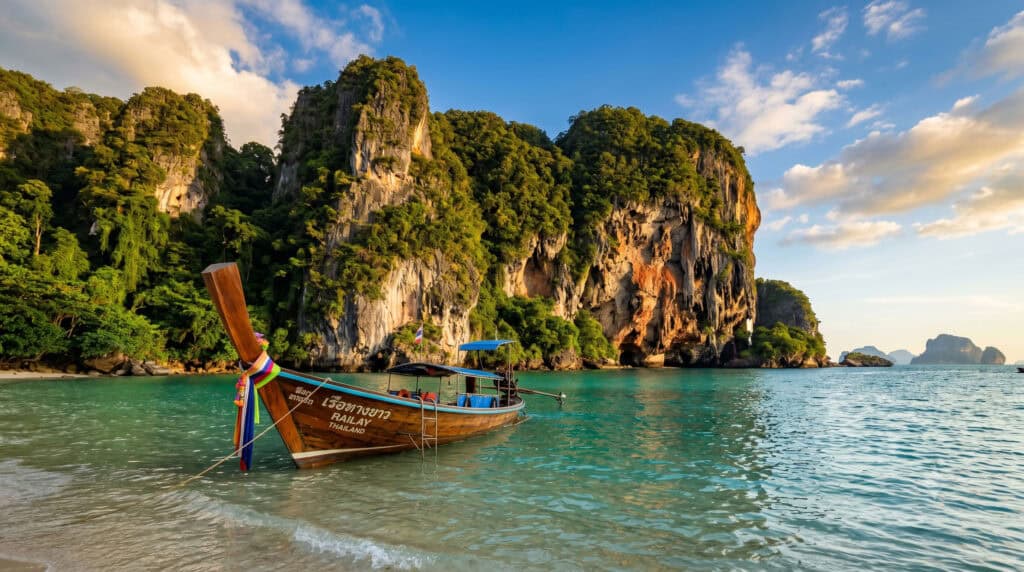
Days 7–10: Krabi. Fly south to Krabi for your beach finish — this is the turquoise water and 300-meter limestone cliff combo that Thailand is famous for internationally. Railay Beach, reachable only by longtail boat from Ao Nang (the cliffs cut off all road access), is the centerpiece. Arrive on Day 7 and get out to Railay for sunset. On Day 8, book a four-island or Phi Phi day trip — if visiting Maya Bay is on your list, check access status before booking, as the bay closes annually from August 1 through September 30 for conservation — check current dates before booking if your trip falls near that window. Day 9 is a gentle wind-down: Krabi’s Sa Morakot (Emerald Pool) is a natural freshwater swimming hole about an hour from Ao Nang that lives up to its name. If you have more time or want to extend this section, our Andaman Sea 7-day itinerary is built to pair with a Bangkok stay as a natural extension.
Best Time, Budget, and What to Pack
Best time to go: For Route A (Gulf Coast), the sweet spot is November through April — the Gulf’s dry season, with Bangkok and central Thailand also running drier November through March. For Route B (Andaman & North), November through April covers both Krabi’s prime season and Chiang Mai’s cool and clear months. If your dates are fixed outside the ideal window, don’t panic: Thailand almost always has a good-weather coast somewhere. Our guide on which Thailand airport to fly into also covers seasonal timing by gateway.
Budget ranges: Budget travelers eating street food and staying in guesthouses might spend $50–75 per day. Mid-range travelers in comfortable hotels with guided tours and sit-down meals run $150–250 per day. Splurge options — design hotels, private guides, rooftop bars — push $400 and up. Your biggest costs are international flights and island accommodation during peak season (December through March); both are worth booking well in advance.
Travel insurance: Get it. Route A covers jungle terrain at Khao Yai, open-water snorkeling at Ang Thong, and potentially a massive beach crowd at Full Moon. Route B adds limestone rock scrambles and open-water boat days at Railay. A policy covering medical evacuation and trip cancellation costs a fraction of one emergency visit at a Bangkok private hospital — which, for the record, are excellent facilities but not cheap.
What to pack: Lightweight, breathable clothes with one or two outfits that cover shoulders and knees for temples. Comfortable walking shoes and sandals you can actually cover distances in. A packable rain layer. Sunscreen brought from home (island prices for name brands are steep). A small crossbody bag for daily use. Universal power adapter if you’re bouncing between hotels.
Frequently Asked Questions About This 10-Day Thailand Itinerary
Is 10 days enough time to see Thailand?
It’s enough for a satisfying first trip. You’ll see Bangkok, Ayutthaya, and either the Gulf islands or Chiang Mai and the Andaman coast — a genuine cross-section of what the country does well. What a 10-day trip doesn’t cover: the other coast, Chiang Rai, or extended northern trekking. Most people who do this trip either add days on the spot or book their return before this one’s over.
Which route is better for first-time visitors to Thailand?
Route A (Gulf Coast) is the slightly easier logistics choice — fewer city-to-city moves, and the Samui-Phangan-Ang Thong island hop is self-contained and well-traveled. Route B (Chiang Mai and Krabi) gives you more cultural depth in the north before the beach finish. If this is your first Southeast Asia trip and you’re genuinely unsure, pick Route A. If you already have some temple-and-beach travel experience and want Chiang Mai’s mountain culture as part of the mix, Route B rewards the extra complexity.
Do I need a visa to visit Thailand?
Nationals of many countries — including the US, UK, Canada, Australia, and most EU nations — can enter Thailand visa-free for up to 60 days, with one possible in-country extension — though Thailand’s Cabinet approved a cut to 30 days in May 2026, pending publication in the Royal Gazette, so confirm current terms before booking.Thailand also now requires travelers to complete a Thailand Digital Arrival Card (TDAC) online before arrival, a requirement in effect as of May 1, 2025. Visa policies change, so always verify your specific passport situation at the Thai Ministry of Foreign Affairs website before finalizing bookings.
How do I get between stops on this itinerary?
Fly between cities. Bangkok to Koh Samui (USM) takes about an hour; Bangkok to Chiang Mai (CNX) takes about the same. Budget carriers including AirAsia and Thai VietJet serve both routes alongside Bangkok Airways. The drive-and-ferry alternatives technically exist but consume too many hours on a 10-day trip. For the Gulf islands, short ferries connect Samui to Koh Phangan in roughly 30 minutes. Within Krabi, longtail boats handle the transfer to Railay since no road access exists. Our guide to Thailand’s best airports to fly into covers the Bangkok gateway logistics in more detail.
What should I leave off a 10-day Thailand trip?
Don’t try to combine the Gulf Coast and the Andaman coast in one 10-day itinerary — the geography doesn’t allow it without burning days on transit. Pick one coast and commit. Also resist adding both Chiang Mai and extensive island time to the same trip; you’ll spend more time in airports and vans than actually experiencing anything. Put what you’re skipping on a future trip with 14–21 days. If Hua Hin interests you as a gentler beach add-on near Bangkok, our Hua Hin travel guide is worth reading as a possible one-night detour.
Is it safe to travel solo in Thailand for 10 days?
Generally yes. Thailand has well-developed tourism infrastructure and is one of the most-visited countries in Southeast Asia. The most common issues are tourist-facing scams near major attractions (the “Grand Palace is closed today” tuk-tuk hustle near Wat Pho is the classic) and petty theft in crowded areas. Use Grab instead of hailing taxis near tourist spots, keep valuables secure, and you’ll cover most situations. Solo women travelers visit both routes in this guide regularly and without incident — standard urban awareness applies throughout.
Thailand rewards travelers who leave a little room to wander. Follow either route, keep one afternoon unscheduled per stop, and you’ll come home with a list of reasons to come back that’s longer than the original itinerary.