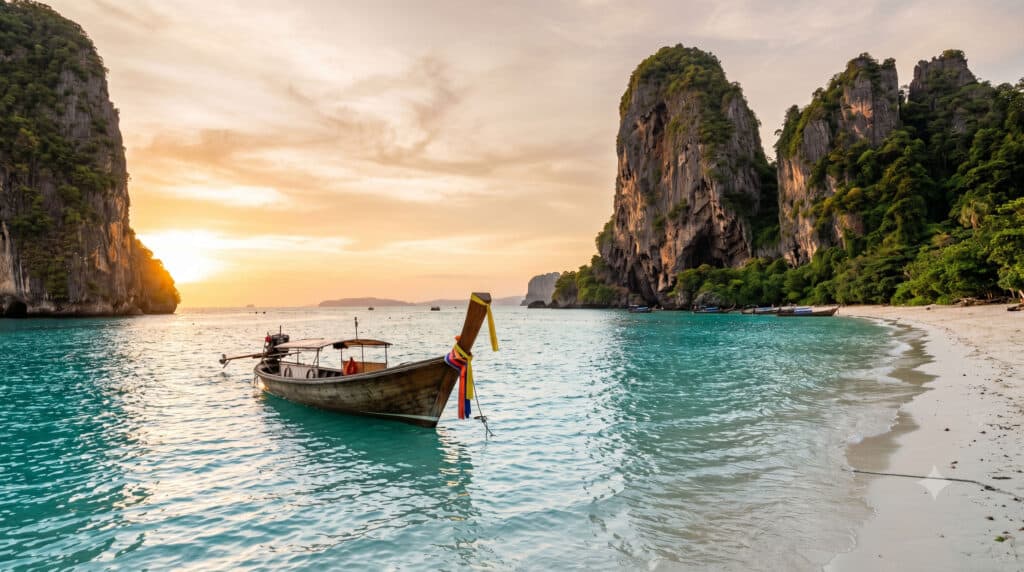
Thailand has roughly 3,000 kilometers of coastline split between two completely different seas — and that detail should drive every beach decision you make. The Andaman coast (Phuket, Krabi, Phi Phi, Koh Lipe) runs on a different monsoon calendar than the Gulf coast (Koh Samui, Koh Phangan, Koh Tao), which means the best beaches in Thailand aren’t just about beauty — they depend on when you’re going. Below is an updated guide to 15 standout beaches organized by vibe, so you can match the sand to your travel style instead of chasing a postcard that happens to be underwater when you arrive.
Quick Picks: Find Your Beach in 10 Seconds
- Most jaw-dropping scenery + adventure: Railay Beach (Krabi)
- Iconic cave and dreamy swimming cove: Phra Nang Beach (Krabi)
- Best local island life near Phuket: Koh Yao Noi (Phang Nga Bay)
- Best postcard sandbar day trip: Koh Nang Yuan (near Koh Tao)
- Best for wildlife and slow travel: Koh Libong (Trang)
- Best easy beach escape from Bangkok: Hua Hin
- Best calm Samui cove: Thong Takian / Silver Beach
- Best quiet Phuket beach: Kata Noi
- Best sunset beach: Sunset Beach, Koh Lipe
- Best Full Moon Party base: Haad Rin, Koh Phangan
Two Coasts, Two Beach Seasons — Pick the Right One First
The single most useful thing to understand about Thai beaches is that the Andaman and Gulf coasts run opposite monsoon patterns. Booking without knowing which coast you’re on — and whether the season is right — is how people end up at a beautiful beach in rainy season wondering why no one told them.
The Andaman Coast (Phuket, Krabi, Koh Lanta, Koh Lipe, Trang) is at its best from November through April, with calm seas and clear skies. Around late May through mid-October, the southwest monsoon arrives — seas roughen, some ferry services cut back, and a few resorts on smaller islands close entirely. Phuket and Krabi stay open year-round, but expect afternoon downpours and occasionally rough water during those months.
The Gulf Coast (Koh Samui, Koh Phangan, Koh Tao) runs its own schedule. Good conditions typically stretch from December through August, with the driest months landing between February and April. October and November are when the Gulf monsoon peaks — if your dates fall there, pivot to the Andaman side. The upside: there’s almost always a good beach option somewhere in Thailand. You just need to match the coast to the calendar. If you’re planning to hop between both coasts, our Thailand island hopping itinerary maps out a logical route without unnecessary backtracking.
The Best Beaches in Thailand for Adventure
1. Railay Beach, Krabi
Railay is one of the most legitimately impressive beach destinations in Thailand — and I say that as someone who’s visited enough times to be jaded by hype. Towering limestone cliffs, turquoise water, zero cars, and a peninsula so cut off from the mainland by rock that you arrive by longtail boat. It feels like an island without technically being one. The rock climbing has a real reputation — both beginners and experienced climbers make the trip specifically for the dramatic walls — but Railay rewards non-climbers just as much, with cave walks, hidden lagoons, and easy day trips over to Phra Nang.
Most visitors arrive via short longtail rides from Ao Nang or Krabi Town piers, with timings that vary by season and tide — see our guide to the best hotels in Krabi if you’re basing yourself in town before crossing over. If you’re building a full Andaman itinerary around it, our Andaman Sea 7-day itinerary from Phuket to Koh Lanta includes Railay as a natural stopping point.
2. Phra Nang Beach, Krabi
Phra Nang is the crown jewel of the Railay area — soft white sand, clear water, and a striking limestone cave at the end of the bay that local tradition has turned into a kind of offering shrine. The beach sits sheltered enough that it often stays calm even when Railay gets a bit breezy, and the water is usually shallow enough for easy swimming. For a place this photogenic, it’s surprisingly easy to find a patch of sand to yourself early in the morning.
You can reach it on foot from East Railay in about 10–15 minutes, or by a short boat ride depending on your base. Go before 9am for the best light and the fewest people.
3. Koh Yao Noi (Phang Nga Bay)
Koh Yao Noi sits roughly in the middle of Phang Nga Bay, equidistant between Phuket and Krabi — making it a genuinely practical base if you want easy day trips in both directions without paying Phuket prices or tolerating Phuket crowds. The island itself is quiet in the best sense: rubber plantations, rice paddies, fishing villages, and sea views facing out toward the dramatic karst formations of Phang Nga. Kayaking, snorkeling trips, and cycling the coastal roads are the main draws, and the accommodation range runs from guesthouses to boutique resorts.
Boats from Phuket and Krabi-area piers run regularly, though schedules shift by season — check locally the day before you plan to cross.
4. Koh Nang Yuan (near Koh Tao, Surat Thani Province)
The three-island sandbar you’ve seen in every Thailand travel post? This is the actual place. It lives up to the photo — a thin crescent of white sand connecting three small peaks over water that runs clear and bright. The snorkeling directly off the beach is some of the most accessible around Koh Tao, and the hike to the viewpoint (about 15 minutes up) produces the kind of panoramic shot that makes people question their desk jobs. It can get crowded mid-morning when day-trip boats arrive from Koh Tao, so plan your timing accordingly.
A few practical notes: day visitors generally arrive from around 10am to 5pm. There’s an entry fee (around 250 THB per adult in recent reports — bring cash and confirm at departure). Food options are limited to the resort restaurant on the island, so eat before you come or budget for resort prices.
Best Family-Friendly Beaches in Thailand
5. Koh Libong, Trang
Koh Libong doesn’t make most shortlists, which is exactly why it belongs on this one. It’s a genuine local island — rubber trees, small temples, fishing boats, and beaches that feel like they’re yours for the afternoon. The main draw for nature-minded families is the dugong population in the waters around Trang: ethical boat tours can take you out to spot them without disturbing feeding areas, which is one of the more memorable wildlife experiences in southern Thailand.
Getting here involves Trang town plus a short ferry — the logistics are straightforward, just less plug-and-play than flying into Phuket. Worth it if you want island time without the resort price tag.
6. Hua Hin
Hua Hin is the most practical beach escape in Thailand for anyone traveling from Bangkok. It’s a proper resort town — wide beach, strong hotel selection at every price point, night markets, golf courses, and enough restaurants to keep a picky eater busy for a week. The beach itself is long and generally calm. Temper expectations for the water itself (it’s a town beach, not a tropical island), but what you get here is convenience, comfort, and a relaxed pace without a five-hour journey or a ferry.
There’s considerably more to do here than most visitors expect. For the full picture, see our guide to the best things to do in Hua Hin — the town punches above its weight.
7. Lamai Beach, Koh Samui
Lamai is the more livable alternative to Samui’s busier Chaweng. It still has proper restaurants, beach bars, and easy transport, but the strip is less intense — which is often exactly what families with younger kids need from a beach base. The Samui Elephant Sanctuary runs ethical day visits on the island, a solid activity for families that avoids the elephant-riding programs that still operate elsewhere. Combined with the calmer southern end of the beach, Lamai is the most underrated base on Samui.
Best Beaches for Seclusion and Romance
8. Kata Noi, Phuket
Phuket’s reputation for crowds is earned — but Kata Noi sits far enough south to feel like a different island most days. The bay is smaller than Kata proper, the hotels skew toward mid-range and above (fewer budget party hostels), and the water on a calm day is clear enough for decent snorkeling off the beach. During the southwest monsoon months it also picks up a bit of surfable swell, making it one of Phuket’s more interesting year-round options. Arrive by 9am if you want the experience before the beach chairs get staked out.
9. Sunset Beach, Koh Lipe
Koh Lipe sits well down toward the Malaysian border, which gives the entire island a slightly different character from the busier Andaman spots — smaller, less developed, and operating at a genuinely slower pace. Sunset Beach faces west, so the name earns its keep: the sunsets here are legitimately good, and the beach is quieter and less commercialized than Koh Lipe’s main Pattaya Beach. The sand gets coarser underfoot in places, and some access routes involve stairs or rocky paths — pack sandals you can actually walk in. Best suited to readers who want a book, a swim, and a good sunset without anything else competing for their attention.
10. Kantiang Beach, Koh Lanta
Koh Lanta is one of the Andaman coast’s better-kept secrets — busier than it used to be, but still running well behind Phuket on the development scale. Kantiang sits at the quieter southern end, with mountain jungle rising behind it and a long spacious bay in front. The resorts here trend toward “slow luxury”: good pools, excellent food, minimal nightlife after 10pm. That’s either ideal or a deal-breaker depending on your travel style. For couples and slow travelers, it’s almost always ideal. Note that Koh Lanta is long and spread out — factor in a bit of driving time to get from the main ferry pier to Kantiang.
11. Thong Takian Beach (Silver Beach), Koh Samui
Tucked between Lamai and Chaweng, Thong Takian is a protected cove with calmer water than either of its more famous neighbors. It’s genuinely small — which either reads as intimate or cramped depending on the day — but on calm mornings, the snorkeling is some of the most accessible on Samui. A handful of small restaurants and beach bars handle food and drinks without the full resort markup. Good for a day trip from either Lamai or Chaweng if you want a quieter swim.
Best Party and Nightlife Beaches in Thailand
12. Haad Rin, Koh Phangan
The Full Moon Party at Haad Rin is still running — monthly, still massive, still worth planning a trip around if that’s genuinely your thing. Up to 30,000 people pack the beach once a month for a night of open-air music, fire shows, and bars that operate until sunrise. It’s loud, crowded, and not remotely budget-neutral once you factor in transport, drinks, and the body paint that’ll be on your clothes for the next three days. Go in knowing that, and it’s one of the more memorable nights available in Southeast Asia. For the practical side — what to drink, what to avoid, and what the legal rules are — our Thailand nightlife and drinking guide has the details.
13. Chaweng Beach, Koh Samui
Chaweng is Samui’s main event: a long beach lined with hotels at every price point, restaurants covering most cuisines, and a nightlife strip that starts late and finishes later. The most convenient base on Samui for people who want options within easy walking distance — the beach, the shops, the food, the bars, all in a compact strip. The Green Mango club at the northern end is still one of the island’s most recognized nightlife venues, and the surrounding area stays active seven nights a week during high season.
14. Pattaya Beach
Pattaya is one of the most accessible beach escapes from Bangkok — roughly two to three hours by road depending on traffic — which makes it a natural pick for weekends and short breaks. The main beach is less of a swimming spot and more of a backdrop for Pattaya’s resort-city energy: tours, water sports, markets, and nightlife at a scale few places in Thailand match. For a quieter daytime swim, the nearby island of Koh Larn runs regular day trips from Pattaya pier and offers significantly cleaner, calmer water.
15. Patong Beach, Phuket
Patong is where Thailand beach tourism goes full volume: big hotels, Bangla Road nightlife, water sports vendors, shopping malls, and crowds that thin out by about noon and return after dark. It’s also one of the most connected beaches in the country — airport transfers run constantly, and every tour operator in Phuket has an office nearby. If nightlife and convenience matter more to you than serenity, it works. Most seasoned Phuket visitors treat Patong as a nightlife base and catch longtails to quieter spots — Kata Noi, Surin, Kamala — during daylight hours.
Smart Tips for Planning a Thailand Beach Trip
Start with the airport. Which beach you choose largely determines which airport you should fly into. Our guide to the best airport to fly into Thailand covers every major gateway and what it’s best positioned for — flying into Bangkok when your destination is Krabi costs you most of a day.
Do two bases, not five. Thailand rewards slow travel. Two beach stops done properly beats rushing through four islands and spending half your vacation on boats and minivans.
Check your travel insurance before you go. Snorkeling, kayaking, scooter rentals, and boat transfers are standard parts of most Thailand beach trips — and most basic travel insurance policies exclude them unless you’ve added an adventure sports rider. Medical evacuation from a remote island like Koh Libong or Koh Lipe can run into tens of thousands of dollars without coverage. This is a high-value line item that’s easy to sort before you fly and genuinely difficult to deal with after an incident.
Pack reef-safe essentials. Sun protection, water shoes for rocky entries, and a dry bag make a real difference across most beaches on this list.
Frequently Asked Questions About Thailand’s Beaches
What is the best beach in Thailand?
If you need a single answer: Railay Beach in Krabi. The combination of limestone cliff scenery, turquoise water, no road access, and genuine variety of activities (climbing, kayaking, cave walks, day trips to Phra Nang) makes it the most well-rounded beach experience in the country. That said, “best” depends entirely on your travel style — Railay is a poor fit if nightlife is your priority, and a bad call during monsoon season on the Andaman coast. Match the beach to the trip.
What beaches are closest to Bangkok?
Bangkok sits on the Gulf of Thailand but isn’t on a swimmable coastline. Your closest decent options are Pattaya (roughly 2–3 hours by road), Hua Hin (about 3 hours with reasonable traffic), and Koh Samet (3 hours by car plus a short ferry). For the cleanest, most island-like experience with manageable logistics, Koh Samet is the winner. For maximum convenience and the broadest hotel and restaurant range, Hua Hin or Pattaya work well for a quick weekend escape.
When is the best time to visit Thailand’s beaches?
November through April is the peak dry season and the safest bet for the Andaman coast (Phuket, Krabi, Koh Lanta, Koh Lipe). December through August works well for the Gulf coast (Koh Samui, Koh Phangan, Koh Tao), with February through April being the driest stretch on the Gulf side. October and November are the worst months for the Gulf — the monsoon peaks then — but the Andaman coast is usually still fine. There’s no month when all of Thailand’s beaches are simultaneously in poor condition; you just need to know which coast to head for.
Which Thailand beach is best for snorkeling?
Koh Nang Yuan (near Koh Tao) consistently earns the highest marks for accessible snorkeling — colorful reef, clear water, and the ability to snorkel directly off the beach without a separate boat trip. Koh Tao itself has several excellent sites reachable by a short longtail ride. On the Andaman side, Phra Nang Beach and the reefs around Koh Yao Noi offer strong snorkeling on calm days. Koh Lipe, particularly around the island’s southern tip, is also well-regarded for coral coverage and visibility.
Which beach in Thailand is best for families?
Hua Hin is the easiest family beach in Thailand on logistics alone — no ferry required, solid hotel infrastructure, and plenty of non-beach activities for rainy-day backup. Lamai Beach on Koh Samui is a strong second for families wanting island atmosphere with calmer water. Thong Takian (Silver Beach) on Samui is worth adding as a day trip for its sheltered cove and easy snorkeling. For families with older kids who want more adventure without the party-beach energy, Koh Yao Noi and Koh Nang Yuan both deliver memorable experiences.
Do I need travel insurance for a beach trip to Thailand?
Yes — and the policy details matter more than most people realize. Standard travel insurance often excludes water sports and scooter rentals, which are routine parts of most Thailand beach trips. Look for a policy that explicitly covers snorkeling, kayaking, and motorized activities. Medical evacuation coverage is especially important if you’re visiting smaller or more remote islands (Koh Libong, Koh Lipe, Koh Nang Yuan) where hospital access is limited and an airlift or boat transfer to a mainland facility can cost tens of thousands of dollars without coverage in place.
Thailand’s beaches reward you for showing up with a plan. Pick your coast, match the season, and give yourself enough time in each place to actually settle in. The best beach trip in Thailand isn’t the one where you saw the most beaches — it’s the one where you actually felt like you were there.