Thailand truly earns its “Land of Smiles” nickname—most people you’ll meet are genuinely warm, and violent crime against tourists is rare. But scams in Thailand are a different story, and they cluster around a predictable handful of setups: inflated taxi fares, commission-driven tuk-tuk detours, and rental deposits held hostage. Once you know the pattern, each one takes about ten seconds to sidestep. Here’s exactly what to watch for in Bangkok, Phuket, Pattaya, and beyond, plus the phrases and habits that shut each scam down before it costs you a single baht.
Tourist Pricing Scams in Thailand
Thailand runs dual pricing at some attractions and national parks: locals pay one rate, foreigners pay another, often justified as locals already funding sites through taxes. Where it gets annoying is when “tourist pricing” shows up informally, like a street stall that suddenly costs two or three times what you saw a block away.
How to avoid overpaying without being a grump
Choose vendors with posted prices or a visible menu, and ask the price before you order, especially in tourist zones. Carry small bills so you’re never stuck with “no change” as an excuse to round up. Sometimes an extra 10 to 30 baht isn’t worth the argument, so save your bargaining energy for prices that are genuinely out of line.
Taxi, Tuk-Tuk, and Grab Pricing Games
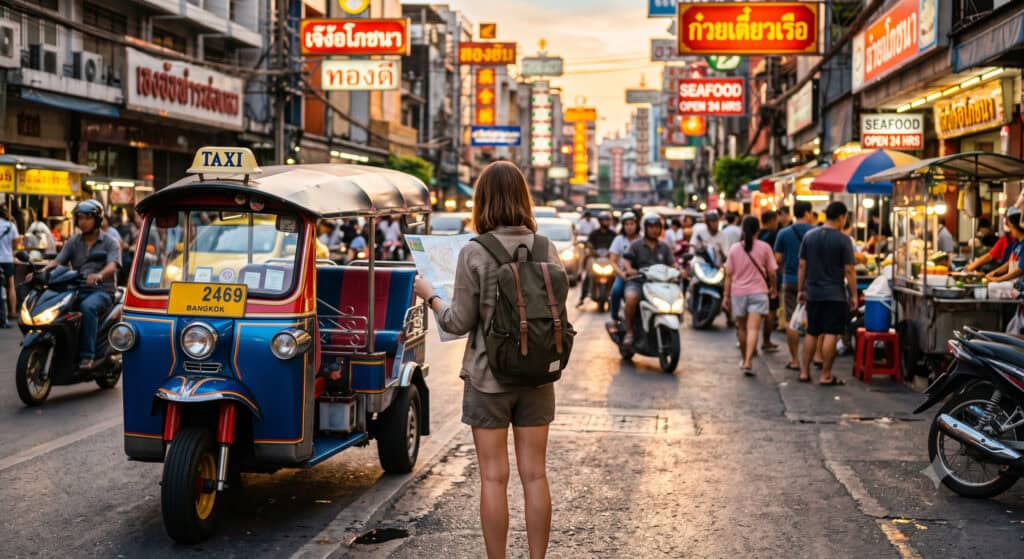
Transportation scams are global, and Thailand isn’t unique here. The common moves are refusing the meter, quoting an inflated fixed price, taking the “long way,” or turning a short ride into a surprise shopping tour. The U.S. State Department specifically flags taxi and tuk-tuk drivers overcharging tourists and recommends asking for the meter or agreeing on a fare before you get in.
In Bangkok, using Grab or the BTS Skytrain and MRT sidesteps the negotiation entirely, and both are covered in more detail in our guide to getting around Bangkok. If you flag a street taxi, say “meter, please” before you get in; if the driver refuses, just take the next one. Tuk-tuks don’t have meters at all, so agree on a total price up front, and treat “very cheap, I take you special places” as your cue to say no thanks.
The Commission Detour: Tailors, Gem Shops, and “Government Sales”
This one is legendary in Bangkok. A friendly driver offers a suspiciously cheap ride, then detours to a tailor, gem shop, or “export center” where someone delivers a high-pressure pitch. The U.S. Embassy in Thailand specifically warns that tuk-tuks, taxis, and even buses sometimes steer tourists toward stores because the driver earns a commission on anything you buy.
A close cousin is the “temple is closed today” line, where a stranger insists a famous site is shut for a holiday and offers to take you somewhere else instead. Assume the attraction is open until you verify at the gate, and if you want a backup plan, pick it yourself rather than outsourcing your itinerary to someone with an agenda. If you’re sightseeing, book a legitimate tour, take public transit, or use Grab point to point. If you’re already in a tuk-tuk, say “no stops, direct,” and end the ride if that’s ignored.
Rental Damage Scams: Motorbikes and Jet Skis
In beach towns, one of the more stressful scams is a rental operator claiming you caused damage and demanding a large cash payment on the spot. Official UK travel guidance specifically warns against handing over your passport as a rental deposit, since some operators hold it as leverage during a dispute.
Never leave your passport with a rental shop. Instead, take timestamped photos and video of the vehicle, including close-ups of every scratch, before you ride off, and use shops with real paperwork and clear pricing. If a place feels sketchy, there’s always another rental shop a few doors down.
Nightlife Bill Padding and Tourist Hotspot Markups
Bangkok and Pattaya nightlife can be a genuine highlight of a trip, but it’s also where “mystery math” tends to show up: drinks that cost more than expected, service fees that never appeared on a menu, or pressure to buy a round for staff at inflated prices. Only go into venues with a visible price list, ask before you order anything unusual, and pay as you go when you can. If something feels pushy, leave, politely and promptly.
The same logic applies in backpacker hubs like Khao San Road, which stays busy with tourists year-round. These areas see more inflated prices, aggressive sales pitches, and pickpocketing in tight crowds, so buy big-ticket items like long-distance bus or ferry tickets from official counters or reputable travel agencies rather than a street booth, and keep your phone and wallet zipped up after dark. If you’re heading onward from the coast, our guide to getting from Bangkok’s airport to Pattaya covers the legitimate transport options.
One more thing worth knowing before a night out: Thailand’s cannabis rules tightened in mid-2025 and are now medical-only, with a prescription required from a licensed clinic and real fines for public use. Street offers of “something special,” cannabis included, are best answered by walking away. Our guide to Thailand’s drug laws breaks down what’s actually legal in 2026. Carrying small bills also helps here, and our guide to Thailand’s currency covers exchange rates and ATM tips if you need a refresher.
What to Do If You Get Scammed
Stay calm and polite; escalation rarely helps and Thai social norms reward a level tone. Document everything you can: photos, screenshots, receipts, and license plate numbers if a vehicle is involved.
Call the Tourist Police at 1155 (24 hours, English-speaking) for help with scams, disputes, or anything that feels off; the general emergency line is 191 and ambulance is 1669, though English isn’t guaranteed on those. If a driver or vendor is acting shady, head to somewhere public, like a hotel lobby, mall entrance, or transit station, and ask staff for help. Our guide to dealing with police in Thailand walks through what to expect if you need to file a report.
Frequently Asked Questions
Is Bangkok safe for tourists?
Generally, yes. Serious crime against tourists is uncommon; the more likely issues are overpriced taxis, pickpocketing in crowds, and commission-driven detours. Use official transport, avoid flashing valuables, and stay alert in nightlife areas.
Is Pattaya safe for tourists?
Pattaya is heavily tourism-driven and generally safe with the same common-sense habits as Bangkok: watch your drinks, agree on prices before you commit to anything, and be skeptical of offers that sound too good to be true.
What’s the single best habit for avoiding scams in Thailand?
Know the normal process before you need it: meter versus fixed fare, posted menus, official ticket counters. Then practice the one phrase that ends almost every pitch: “no, thank you,” said with a smile, while you keep walking.
Do I need to bargain with tuk-tuk drivers?
Yes, always agree on a total price before you get in, since tuk-tuks don’t run meters. If a quoted price feels unusually low, that’s often a sign you’re about to be routed through a commission stop rather than taken directly to your destination.
Should I ever leave my passport as a rental deposit?
No. Reputable motorbike and jet-ski rental shops don’t need your passport as collateral. Leave a credit card imprint or cash deposit instead, and photograph the vehicle before you ride off so you have proof of its condition.
Enjoy Thailand Without the Stress
Most travelers leave Thailand with zero meaningful scam stories, and the habits above take about as much effort as remembering your hotel’s address. Stick to posted prices, official transport, and a friendly “no thank you,” and the rest of your trip is free to be about the food, the temples, and the beaches you actually came for.