Nothing quite prepares you for Thailand. Not the photos, not the travel blogs, not your friend who went two years ago and still brings it up at dinner. The first hour in Bangkok — the heat, the noise, a monk walking calmly through the chaos — will recalibrate your idea of what a city can feel like. If you’re planning your first time in Thailand and wondering where to start, this guide cuts through the noise. Thailand is one of the best first destinations in Southeast Asia, and with the right plan, it’s surprisingly easy to navigate.
Why Thailand Works So Well for First-Time Travelers
Thailand pulls off a rare trick: serious adventure and easy comfort in the same trip. The infrastructure is solid. Domestic flights, trains, and buses connect the main regions reliably. English is widely spoken in tourist areas, airports, and most hotels. ATMs are everywhere. And the food — whether you’re eating from a street cart for 50 baht or sitting down at a MICHELIN-starred restaurant — is extraordinary at every price point.
The nickname “Land of Smiles” is earned. Thai culture has a warmth that isn’t just tourist-industry performance, and first-timers rarely feel lost or unwelcome. The country draws a wide range of travelers — backpackers, families, honeymooners, solo adventurers — which means the infrastructure adapts to almost any budget or pace.
When to Go: Thailand’s Three Seasons Explained
Thailand has three distinct seasons, and which one you get shapes your entire trip.
The cool and dry season (November–February) is peak season for good reason. Temperatures sit in the mid-20s Celsius, humidity is low, and seas are calm across most of the country. You’ll pay more and share popular spots with more people, but conditions are about as good as it gets. If you can only go once, go now.
The hot season (March–May) brings intense heat, particularly April and May. Budget travelers do well this time of year — prices drop and crowds thin — but you’ll want air conditioning close at hand. Songkran, Thailand’s New Year water festival, falls in mid-April and is worth experiencing once.
The rainy season (June–October) typically arrives in afternoon bursts rather than all-day downpours. The landscape turns lush, prices drop significantly, and the north can be beautiful. Worth knowing: the Andaman coast (Phuket, Krabi, Phi Phi) gets hit harder by the monsoon than the Gulf of Thailand side (Koh Samui, Koh Pha Ngan), so plan which coast you’re visiting accordingly.
The Essential First-Timer Destinations
You don’t need to see all of Thailand on your first visit. These three regions cover the classic circuit for good reason.
Bangkok (3–4 Days)
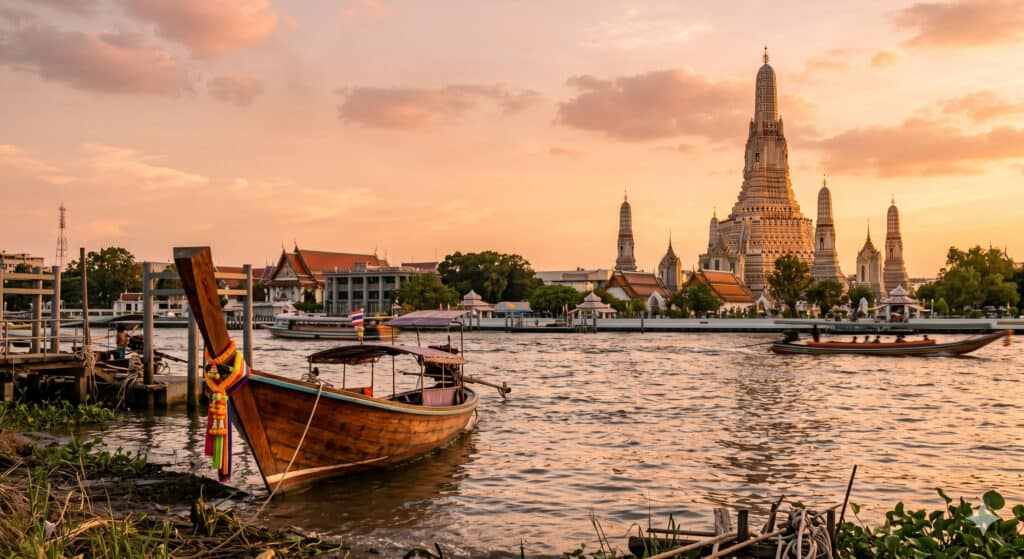
Bangkok hits you all at once. The Grand Palace complex — which includes Wat Phra Kaew, the Temple of the Emerald Buddha and the most sacred Buddhist site in the country — is a required first stop. Budget a full morning. Across the Chao Phraya River, Wat Arun’s distinctive mosaic spires are worth the short ferry crossing. Wat Pho, a short walk south of the Grand Palace, houses a 46-meter reclining Buddha and one of the oldest traditional massage schools in Thailand.
Beyond the temples, spend time in the neighborhoods. Chatuchak Weekend Market has over 8,000 stalls spread across an enormous outdoor complex — allow half a day and bring cash. Take a longtail boat along the Chao Phraya to see the city from the water. Eat on the street as much as possible. A full street-food dinner rarely costs more than 100–150 baht ($3–$4).
Chiang Mai (3–4 Days)
Chiang Mai operates at a different pace. The walled Old City packs dozens of temples into a few walkable blocks, and Doi Suthep — a revered hilltop temple about 15 km outside the city — delivers panoramic views over the valley. If you go one afternoon, go for the sunset. The must-visit temples of Thailand include several in this region that showcase the distinctive Lanna-style architecture you won’t find anywhere in Bangkok.
Thai cooking classes are everywhere and genuinely worthwhile. A half-day class that starts at a local market and ends with a four-course lunch you prepared yourself runs about 800–1,200 baht ($22–$33). The elephant sanctuary scene here is large — research before you book and avoid anywhere offering riding or performances. Many reputable sanctuaries in the region have shifted entirely to observation-based models.
The Southern Islands (4–7 Days)
For beaches, you’re choosing between two coastlines. Phuket, Krabi, and Phi Phi sit on the Andaman Sea — dramatic limestone karst scenery, turquoise water, and strong dive and snorkel sites. Koh Samui and Koh Pha Ngan face the Gulf of Thailand and tend to be calmer during the Andaman monsoon months. Our guide to the best beaches in Thailand breaks down what each region offers in detail.
Railay Beach near Krabi is accessible only by longtail boat from Ao Nang — no roads reach it, which keeps the atmosphere surprisingly peaceful. Maya Bay at Phi Phi Leh, made famous by the film The Beach, is open again after a multi-year conservation closure. It now operates with a strict cap of 375 visitors at a time and closes annually from August 1 through October 1 for environmental restoration. Book a boat tour that leaves early and it’s well worth the visit.
Experiences Every First-Timer Should Have
A traditional Thai massage runs 200–300 baht an hour in most towns — roughly $5.50–$8.50 USD. It’s nothing like a spa treatment. Book an hour and plan to go back before you leave. Street food is the whole point: pad thai, mango sticky rice, som tum, khao man gai — don’t save all the eating for restaurants. The best meals in Thailand happen at plastic tables on sidewalks.
Temple hopping rewards slow exploration. Thailand has more than 44,000 Buddhist temples, each with its own character — even an afternoon wandering through the ones near your accommodation leaves a lasting impression. If Muay Thai interests you, catching a live match at Rajadamnern or Lumpinee Stadium in Bangkok is the real experience: loud, fast, and nothing like what you’ve seen on TV.
The floating markets near Bangkok are worth a half-day. Amphawa on a weekend evening is the better pick over the more touristy Damnoen Saduak. And if you want a proper framework for planning your island time, our 7-day island hopping itinerary is a solid place to start.
Practical Tips That Actually Matter
Visa: Most nationalities receive a visa exemption on arrival, though the duration varies by passport and Thailand has updated its policies several times in recent years. Check the current rules for your specific passport before you fly. Full details on Thailand visa requirements are broken down on the site.
Money: Thai ATMs accept most international cards but charge a fixed withdrawal fee — typically 250–350 baht (about $7–$10) per transaction. If you have a bank account that reimburses foreign ATM fees, use it here. Don’t exchange currency at the airport; rates in town are meaningfully better.
Getting Around: Grab works well in Bangkok, Chiang Mai, and most tourist areas — cheaper and easier than negotiating tuk-tuk fares. For longer distances, domestic flights are fast and affordable; the Bangkok-to-Chiang Mai route regularly costs under $40 when booked a few weeks ahead.
Temple Etiquette: Cover your shoulders and knees before entering temples — many popular entrances sell cheap sarongs if you’ve forgotten. Remove shoes before going inside. Don’t point your feet toward Buddha images or altar areas.
Scams: The gem scam, the closed-attraction redirect, and the overpriced tuk-tuk “tour” are the classic first-timer traps. They’re easy to dodge once you know they exist. Read up on the most common scams in Thailand before you land.
Travel Insurance: Thailand’s private hospitals are excellent — the risk isn’t quality, it’s cost. Medical emergencies and evacuations without coverage can be financially devastating. A comprehensive policy covering medical emergencies, evacuation, and trip cancellation is worth adding to your pre-trip budget.
A Sample 10-Day Thailand Itinerary
Ten days covers the classic circuit without feeling rushed. Days 1–3 in Bangkok: Grand Palace, Wat Pho, Wat Arun, Chatuchak, and as much street food as you can handle. Days 4–6 in Chiang Mai: Doi Suthep, Old City temples, cooking class, and an ethical elephant sanctuary. Days 7–10 in Phuket or Krabi: beach days, a Phi Phi Islands day trip, and Railay Beach if you’re based on the Krabi side.
For a fully built-out version with logistics, accommodation suggestions, and alternative routing, our detailed 10-day Thailand vacation itinerary is worth reading before you finalize your plans.
Frequently Asked Questions About First-Time Travel to Thailand
How long should I spend in Thailand on a first trip?
Ten days is the sweet spot — enough time for Bangkok, Chiang Mai, and one southern island destination without feeling constantly on the move. Two weeks is more relaxed. Under a week makes it hard to get beyond Bangkok, which would be a shame.
Is Thailand safe for solo travelers?
Thailand is one of the most solo-friendly destinations in Southeast Asia. Solo female travelers, solo male travelers, and older solo travelers all generally report positive experiences. The main risks are tourist scams and petty theft, not violent crime. Standard travel awareness applies throughout, particularly in crowded tourist areas.
How much does a trip to Thailand cost per day?
Budget travelers can live well on 1,000–1,500 baht per day ($28–$42 USD), covering guesthouses, street food, and local transport. Mid-range travelers spending 2,000–3,500 baht daily ($55–$97) can stay in comfortable hotels, eat at sit-down restaurants, and join organized tours. Bangkok and the southern islands generally run pricier than Chiang Mai or rural areas.
What vaccinations do I need for Thailand?
Consult a travel medicine clinic or your doctor 4–6 weeks before departure. Standard recommendations for Thailand typically include hepatitis A and B, typhoid, and being current on routine vaccines. Malaria prophylaxis is generally recommended for some rural border areas but not for Bangkok, Chiang Mai, or the main tourist islands. The CDC’s Thailand destination page is the most reliable reference to check before you travel.
Do I need travel insurance for Thailand?
Yes. Thailand’s private hospitals are high quality, but treatment costs without insurance add up fast. A policy covering medical emergencies, emergency evacuation, trip cancellation, and lost luggage is worth the cost. Compare a few options before booking — this is one travel expense worth not cutting corners on.
What’s the best way to find cheap flights to Thailand?
Book 3–6 months ahead and be flexible on travel dates. Flying into Bangkok’s Suvarnabhumi Airport (BKK) gives you the most options; Don Mueang (DMK) often serves budget carriers at lower fares. Routing through a hub like Tokyo, Seoul, or Dubai can unlock significantly better pricing. For a full breakdown of strategies, see our guide to cheap flights to Thailand.
Thailand gets under your skin quickly — most people who go once are already thinking about their return before they’ve unpacked. Book the trip. The rest tends to take care of itself.