Thailand or Bali is the question that stalls more Southeast Asia trips than any other. Mountains or beaches. Temples or surf. Night markets or rice-field cafés. Both destinations deliver on the postcard, so the real decision isn’t which country is “better” — it’s which one matches the trip you actually want to take.
Here’s the thing nobody tells you upfront: you won’t experience “Thailand” or “Bali” as a whole. You’ll experience Bangkok plus a couple of islands, or Chiang Mai plus the north. On the Bali side, you’ll likely settle into Canggu, Uluwatu, and Ubud, maybe with a Nusa Penida day trip tacked on. Comparing the countries head-on is like comparing “Europe” to “a country” — it only works once you know which regions you’re actually weighing against each other.
Stop comparing countries — compare the regions you’ll actually visit
Most first-time visitors end up choosing from a short list of regions in each country, and those regions have wildly different personalities.
In Thailand, the common stops are Bangkok, Phuket, Krabi and Railay, the Phi Phi Islands, Koh Phangan, Chiang Mai, and Pai. In Bali, travelers tend to cluster around Kuta and Legian, Canggu, Uluwatu, Nusa Penida, Ubud, and the Mount Batur area near Kintamani.
Pick Thailand if you want more regional variety packed into one trip — a big city, islands, and mountains without changing countries — plus a wider spread of island personalities, from quiet to loud to dive-focused. Pick Bali if you want a compact, base-yourself trip with fewer flights, surf woven into daily life, and a tight blend of wellness, cafés, and dramatic coastline. Both places serve up excellent food and no shortage of adventure, so neither is really the “safe” or “risky” choice here.
What Thailand’s top regions actually feel like
Bangkok and the islands
Bangkok is the jolt that kicks off most Thailand trips — temple-hopping in the morning, street food crawls by afternoon, rooftop bars by night. Give it at least two or three nights so it registers as a city you experienced, not one you survived. From there, most people fly or bus south to Phuket or Krabi. Phuket is the convenient choice: beaches ranging from packed to peaceful, easy day-tour bookings, and enough resort infrastructure that families and first-timers rarely feel lost. For deeper planning on where to base yourself once you land, our Phuket neighborhood guide breaks down which areas suit nightlife versus quiet mornings.
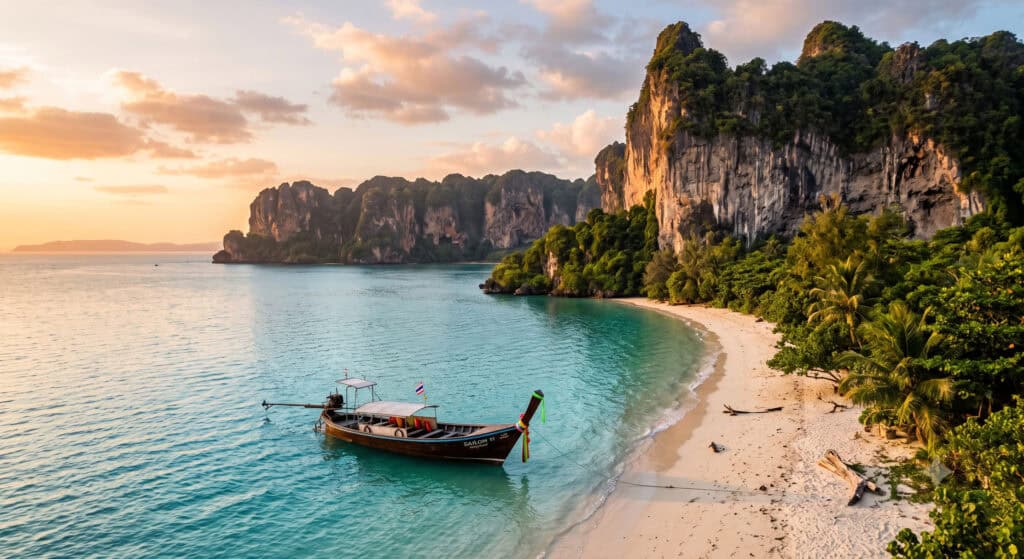
Krabi and the Phi Phi Islands push the scenery up a notch — limestone cliffs, Railay’s rock climbing, and boat-hopping between beaches that look faked until you’re standing on them. Phi Phi remains the poster child for Thailand’s tropical islands, but Maya Bay (the cove made famous by “The Beach”) now runs on a tighter leash: entry is capped near 300 visitors per one-hour slot, wading is allowed but swimming is not, and the bay closes completely from August 1 through September 30 each year so the coral can recover. Build around that closure window if you’re planning a Phi Phi stop.
Chiang Mai and Pai
Chiang Mai trades beach time for mountain air, night markets, and a food scene that rewards slow eating. It’s a favorite for digital nomads and culture-first travelers, and if elephants are on your list, skip the Bangkok day-trip operators — our guide to Chiang Mai’s ethical elephant sanctuaries covers which ones actually let the animals just be elephants. From Chiang Mai, Pai is a scenic three-hour drive into slower living: viewpoints, hot springs, and cafés built for lingering rather than checking boxes.
Koh Phangan deserves its own mention for the Full Moon Party, which is still very much running on Haad Rin Beach — 2026 dates land on the actual full moon each month, with the usual shift around Buddhist holidays. But the island has quiet coves and yoga retreats too, so don’t write it off if parties aren’t your scene; just pick your beach carefully.
What Bali’s top areas actually feel like
Canggu, Kuta, and Uluwatu
Kuta and Legian are Bali’s original beach strip — close to the airport, easy to navigate, built for quick fun rather than quiet reflection. Canggu picks up where Kuta left off but with a more polished edge: surf breaks, cowork-friendly cafés, and a social scene that tends to stretch a “few days” into a couple of weeks. Uluwatu is the dramatic finale — clifftop views, world-class surf breaks, and sunset dinners perched above the water. The Kecak fire dance, still staged most evenings near Uluwatu Temple at sunset, is worth building an evening around if you’re in the area.
Nusa Penida, Ubud, and Mount Batur
Nusa Penida rewards anyone chasing raw coastal scenery and marine life, though the roads are rougher than mainland Bali once you leave the main routes. Divers should time it deliberately: manta rays show up on Nusa Penida dives essentially year-round, while mola mola (oceanic sunfish) sightings cluster from July through October, peaking in August and September when cold-water upwelling draws them into Crystal Bay.
Ubud is Bali’s slower, more spiritual counterpart — rice terraces, temple ceremonies, and a craft and wellness scene that rewards travelers willing to wander past the main strip. Nearby, Mount Batur remains the classic sunrise hike, and while it’s genuinely an active volcano (as is Mount Agung farther east), both are closely monitored, and guided hikes proceed normally under typical conditions. Always confirm current access and safety advisories with your guide company before booking, since alert levels can shift.
Thailand or Bali: which wins for what
If you surf or want to learn, Bali takes it — the culture around Canggu and Uluwatu is simply more built-in than anything Thailand offers. If you want maximum variety packed into a single trip, Thailand wins; a Bangkok-plus-islands-plus-mountains itinerary can feel like three different countries without ever leaving one.
If you want a simple, base-yourself trip with minimal flights, Bali’s compact geography makes that easy. If island-hopping with distinct beach personalities is the goal, Thailand’s options run deeper and wider — our island-hopping itinerary guide maps out a realistic week-long route. And if spiritual culture in daily life matters to you, both deliver it differently — Bali through Hindu offerings and ceremony woven into everyday streets, Thailand through Buddhist temple life that’s especially visible in Bangkok and the north.
What to know before you book
Both countries enforce strict drug laws, and penalties can be severe even for substances that are casually legal at home. Thailand’s cannabis rules tightened considerably in mid-2025: recreational use is now banned outright, and legal purchase requires a same-day medical consultation and a prescription valid for just 30 days. Thousands of dispensaries have closed as a result, so don’t assume the more relaxed 2022-era rules still apply. For a sense of how fast Thailand’s regulations can shift, our guide to Thailand’s 2026 alcohol ban dates covers the religious holidays that also affect bar and liquor sales.
On the practical side, figure out your entry airport before anything else — Bangkok, Phuket, and Chiang Mai all serve different itineraries, and our airport comparison guide breaks down which one saves you the most backtracking. Whichever country you land in, a decent travel insurance policy is worth the extra fifty dollars — it’s the difference between a minor inconvenience and a real financial hit if a scooter spill in Pai or a dive incident near Nusa Penida sends you to a clinic.
Frequently asked questions
What are the most popular cities to visit in Thailand?
Bangkok, Chiang Mai, Phuket, Krabi, the Phi Phi Islands, and Koh Phangan top most first-timers’ lists. Many travelers pair one city with one beach region to balance culture and relaxation in a single trip.
What is the best place in Thailand for first-time tourists?
A Bangkok-plus-Krabi-or-Phuket combination, with a nearby island added on, is usually the smoothest introduction: it covers culture, food, and beaches without overly complicated logistics.
Is it cheaper to visit Thailand or Bali?
Both destinations run affordable by Western standards, though Thailand’s wider range of budget accommodation and street food generally edges out Bali for a tight-budget trip, especially outside Bali’s more built-up areas like Seminyak and Uluwatu.
Can you do both Thailand and Bali in one trip?
Yes, though it takes planning — flights between Bangkok and Denpasar typically require a layover, and most travelers need at least 10 to 12 days total to avoid feeling rushed in either country.
Is Bali part of Thailand?
No. Bali is an island province of Indonesia, while Thailand is a separate country entirely. They’re both popular Southeast Asia destinations, but they don’t share a government, currency, or border.
Do you need a visa for Thailand or Bali?
Many nationalities can enter both countries visa-free for short tourist stays, but rules vary by passport and change periodically, so confirm current requirements directly with each country’s immigration authority before booking.
Whichever direction you land on, book flexible-cancellation lodging for the first night or two — jet lag and shifting weather can reshuffle even the tightest itinerary. And keep this comparison bookmarked, because plenty of travelers end up doing both eventually, just not on the same trip.