Most Thailand trips don’t fail because of bad luck. They fail because of decision fatigue: too much country, too many good options, too little time to research all of it properly. This Thailand vacation planning guide is built to shortcut that. It walks through which region actually matches the trip you want, how many days that region needs, what’s changing with Thailand’s visa rules in 2026, roughly what to budget, and what needs to be locked in before you land versus what can wait until you’re on the ground.
Start With the Big Decision: Which Region Fits the Trip You Want
Bangkok is where almost every international flight lands, and it deserves more than the overnight-layover treatment most itineraries give it. Budget at least two full days. The Grand Palace and Wat Pho anchor the must-see list, but Bangkok’s real character shows up in Thonglor’s cocktail bars, Ari’s quiet cafe streets, and the market chaos of Chinatown after dark.
Chiang Mai runs on a different rhythm entirely — an hour north by air and it feels like landing in another country. The old city’s moat-ringed temples set a slower pace, and it’s the launch point for mountain trekking, hands-on Thai cooking classes, and ethical elephant sanctuaries that focus on rescue and rehabilitation rather than rides. Give it three nights minimum; two disappears fast. Our guide to Chiang Mai’s ethical elephant sanctuaries breaks down which ones actually deliver on that promise.
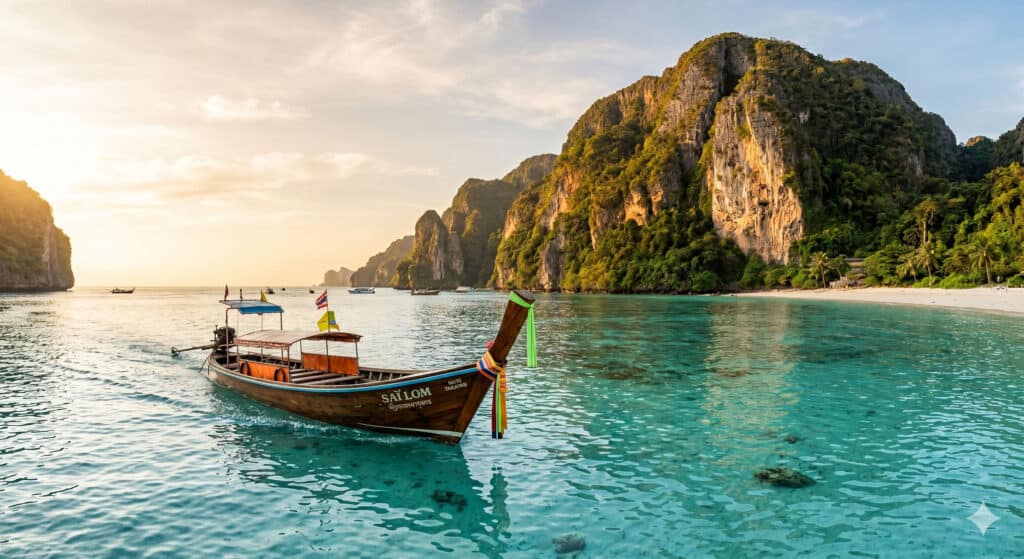
The islands split into two coasts that behave nothing alike. The Andaman side — Phuket, Krabi, Koh Lanta, Phi Phi — delivers the postcard scenery: limestone karst cliffs, turquoise water, snorkeling that holds up even if you’ve done the Caribbean or the Red Sea. It’s at its best November through April. The Gulf Coast — Koh Samui, Koh Phangan, Koh Tao — stays calmer into May and June, making it the better call outside peak season. Koh Tao alone is worth a mention for divers: a PADI open water certification here runs roughly 12,000 baht, about $340, a fraction of what the same course costs in Europe or Australia. Our guide to Thailand’s best beaches breaks down which stretch of coastline fits which kind of trip.
Ayutthaya doesn’t need a multi-night stay, but it’s worth carving out a day for. Ninety minutes north of Bangkok by train, the ruined temple towers and weathered Buddha statues of the old capital make for one of the most underrated day trips in the country. Most travelers wish they’d built in the time.
How Many Days Does Your Itinerary Actually Need?
One week covers one region properly — Bangkok plus a few island days, or Chiang Mai plus a short beach add-on. Trying to cram all three into seven days just means half the trip disappears into transit.
Two weeks is the itinerary that actually works for most first-timers: two or three nights in Bangkok, a short flight up to Chiang Mai for two or three more, then five or six days on the islands. It’s enough time to feel like you’ve experienced the country instead of skimmed it.
Three weeks or more is where Thailand starts paying real dividends. Stay put on one island for a week. Take the cooking class. Ride the overnight train north and watch the landscape change through the window. For a route that strings the islands together in a sane order, our 7-day island hopping guide is a good starting template even over a longer trip.
When to Go, in Brief
Thailand’s peak season runs November through February — cooler, drier, and the easiest stretch for temples, beaches, and trekking without the weather working against you. March through May turns hot fast, though Songkran, Thailand’s water festival, typically mid-April, is worth planning around either way. You’re either in the middle of it or deliberately avoiding it. The rainy season, roughly May through October, gets an unfair reputation: it usually means an hour of hard rain in the afternoon and sun again by dinner, not a washed-out week. The one detail that trips people up: the Andaman coast gets genuinely rough seas from June onward, while the Gulf Coast stays calmer through that same window — which coast you’re headed to should decide when you book more than the calendar month does. Loy Krathong and the Yi Peng lantern festival, both centered on Chiang Mai in November, are worth building a trip around if the dates line up. This is the short version. For the full season-by-season breakdown, including the haze season that affects northern Thailand specifically, our Thailand travel tips guide covers it in more depth.
Visa and Entry Rules: What’s Changing in 2026
Right now, citizens of around 93 countries — including the US, UK, Canada, Australia, and most of the EU — can enter Thailand visa-free for up to 60 days, with a one-time 30-day extension available at a local immigration office. That rule won’t hold much longer. In May 2026, Thailand’s Cabinet approved cutting the visa-free stay from 60 days down to 30 days for most nationalities, with 15 days for a smaller group, and confirmed the change again in mid-July 2026. As of this writing, the new rules haven’t been published in the Royal Gazette yet, and they take effect 15 days after that happens, so the 60-day exemption still holds at the border. Don’t plan a 45-day trip around the old number. Check the current rule shortly before you fly.
Separately, every traveler now has to complete the Thailand Digital Arrival Card online, and the timing matters: it can only be submitted within 72 hours of arrival, not sooner. It’s free through the official immigration site. Ignore any third-party page that tries to charge you for it. Our Thailand visa requirements guide tracks the rule changes as they’re finalized.
Budgeting the Trip, Not Just the Day-to-Day Spend
Every Thailand vacation planning guide will tell you Thailand is cheap. That’s accurate, but the range within “cheap” is wider than most people plan for. A budget trip — street food, guesthouses, public transport — runs comfortably on $40–60 a day. A mid-range trip, with a pool hotel and a mix of restaurants and street stalls, lands around $100–150 a day. Upscale travel is where Thailand actually over-delivers: a resort that would run $400 a night in Europe often costs $150–200 on Phuket or Koh Samui during peak season.
Watch for expenses that catch first-timers off guard: airport transfers (ask your hotel about a fixed-rate pickup before you land), entrance fees at national parks and major temples, and boat charters on the islands. Booking tours directly at the pier, rather than through a hotel desk, is almost always cheaper.
What to Lock In Before You Land, and What Can Wait
Book ahead: international flights (prices climb steeply before peak season), accommodation for December and January if a specific resort matters to you, and ethical elephant sanctuaries in Chiang Mai. The reputable ones, focused on rescue rather than rides, fill up weeks out.
Leave flexible: most day tours and boat trips, domestic flights (Air Asia and Nok Air both run frequent, reasonably priced routes if booked a couple of weeks out), and basically everything outside the December-to-January crunch. Thailand’s tourism infrastructure is good enough that over-planning months out usually just costs you flexibility for no real benefit.
A Few Rookie Mistakes Worth Skipping
Tuk-tuks look like the authentic, cheap option. They’re usually neither — expect to pay two or three times what a metered taxi or a Grab ride costs for the same trip. Grab, Thailand’s Uber, handles pricing transparently in Bangkok and most other cities, and it removes the negotiation entirely.
Temple dress codes are enforced, not suggested: shoulders and knees covered, every time. Keep a light scarf or sarong in your day bag rather than relying on gate loaners.
If someone near the Grand Palace tells you it’s closed for a ceremony or cleaning today, that’s a script, not information. It’s one of Bangkok’s most reliable scam setups, steering tourists toward a gem shop for a commission. The Grand Palace is almost never actually closed.
And don’t let stomach anxiety keep you off the street food. Stick to stalls with heavy turnover, watch your food get cooked, and stay on bottled water for the first couple of days while you adjust. After that, street food is one of the best reasons to be in Thailand at all.
Frequently Asked Questions About This Thailand Vacation Planning Guide
Which Thailand region should a first-time visitor pick?
If you only have one trip’s worth of time, choose one region and go deep rather than skimming three. Bangkok suits culture and food-focused trips, Chiang Mai suits slower, nature and craft-focused travel, and the islands suit anyone prioritizing beaches and diving. Most first-timers do best combining Bangkok with one other region rather than trying to see everything at once.
How many days should a Thailand itinerary run?
One week is enough for a single region done properly. Two weeks lets you combine Bangkok, Chiang Mai, and a beach stretch without rushing. Three weeks or more is where the trip starts to breathe — you can slow down and stay longer in fewer places instead of covering more ground.
Is Thailand still visa-free for 60 days in 2026?
As of this writing, yes — the 60-day visa-free rule remains in force. Thailand’s Cabinet has approved cutting it to 30 days for most nationalities, confirmed again in July 2026, but the change only takes effect 15 days after publication in the Royal Gazette, which hadn’t happened yet. Confirm the current rule shortly before you travel rather than relying on last year’s number.
What should be booked before arriving in Thailand?
International flights, accommodation for December and January if a specific place matters, and ethical elephant sanctuaries in Chiang Mai — the reputable ones fill up weeks ahead. Nearly everything else, including day tours and domestic flights, can be booked a week or two out without any trouble.
How much does a Thailand vacation cost per day?
Budget travel runs $40–60 a day, mid-range trips land around $100–150 a day, and upscale resorts that would cost $400 or more a night elsewhere often run $150–200 a night in Thailand during peak season. The bigger cost swings come from flights and any pre-booked elephant sanctuary or dive certification, not daily spending.
The country rewards travelers who pick a lane rather than trying to cover all of it in one trip. Narrow the region, build the itinerary around realistic travel days, and leave the rest loose. Once the big decisions are locked in, the smaller logistics — packing, SIM cards, cash strategy — are worth sorting next. Our Thailand travel tips guide walks through exactly that.